On June 25, the Pittsburgh Public Schools board voted 5-4 to officially begin the process implementing the “Facilities Utilization Plan” (often dubbed the “FU Plan” by community members). The plan would ultimately lead to the closure of 12 schools.
In the weeks leading up to the vote, community members compiled a list of 145 unique questions that remained unanswered about the plan. Local community organization 412 Justice emailed the questions to each school board member. The questions covered many topics important topics including incorrect data/statistics, transparency, feeder patterns/attendance zones, staffing and furloughs, class sizes, transporting students to new schools, services for students with disabilities, supporting English Language Learners, renovation and expansion of old buildings and the lack of proper demographic data or an equity audit to prevent exacerbating current racial inequities. These questions went unanswered during the board’s legislative meeting.
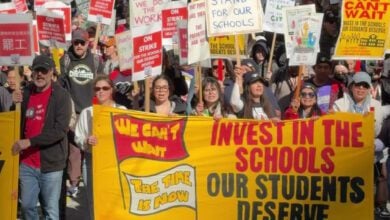
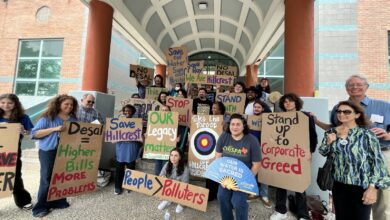
On June 23, two days prior to the school board’s vote, PPS held its monthly public hearing. A rally was held just prior to the hearing, in which community members, parents and even an elementary school student spoke out against the closures. The student, whose school is slated to close, argued: “I always do my homework and the people who want to close schools should do theirs! We’re not just numbers in a class, we are friends and classmates. I don’t like crowded classrooms!”
During the public hearing, 64 community members — including several PPS students — spoke in fierce opposition to the proposal. Not a single speaker spoke in favor of the plan. Community members doubled down on concerns over class sizes, transportation, the quality of services for students with exceptionalities, the huge costs of charter schools and the general uncertainty of the future for our city’s students.
Some community members brought forward specific inaccuracies of the plan. For example, one parent shared a spreadsheet that highlights mathematical mistakes in projected numbers of students which underestimates the required classes for all but two of the district’s schools – thus, proving that these school closures will result in overinflated class sizes.
During the June 25 legislative meeting, the few dissenting school board members made powerful statements against the “FU Plan.” District 2’s school board member Devon Taliaferro argued, “It’s hard to sit at this table and, one, vote on a resolution to start the process of closing these public school buildings, and then right after that vote on three charter school renewals.” She urged the other board members to engage in a “district-wide door knocking campaign by every single person sitting at this table – because you should have to look people in their eyes and ask them what they want for the building that sits in their community that their children could walk around the corner to.”
District 3 of PPS is represented by Sala Udin, who is a long-time civil rights and human rights activist. During the mid-1960’s Udin moved from Pittsburgh to Mississippi to help bring an end to segregation and racial violence. This experience serves as a bedrock for his support for enduring public education in Pittsburgh:
“I think it would be helpful for us to go back and study the history of public education and how America came to select public education. It has been a very very difficult ride, and many Americans do not agree with the notion of public education – some for racial reasons, some for financial reasons. But it has been a very difficult struggle. African-American families have supported public education throughout its history because, after slavery, education became the most important path to success and to freedom … We don’t decide to send or not send our children to school on the basis of many of the things that we have been debating. We send them to public school because we hope for a quality education to open up the doors to freedom. That’s why we have so much hope for our children in public schools.”
Udin concluded his remarks by rebuking the whole closure process: “I feel sorry for the parents who hoped for a better outcome. We have failed you.”
Soon after these statements, the board made their final vote on the school closure resolution. Five members voted Yes to move forward with the closures: Sylvia Wilson (District 1), Yael Silk (District 4), Tracey Reed (District 5), Dwayne Barker (District 8), and Gene Walker (District 9). This vote will not immediately close these schools, but will officially place them on the chopping block prior to the expected final vote in November.
Following the vote, PPS moved quickly to schedule the public hearings for each school. Against Taliaferro’s wishes, each session will take place in July when many families are traveling or disengaged from school proceedings. The hearings will take place July 21-30.
Despite the commitment of PPS to implementing this school closure plan, they have revealed themselves to be vulnerable to overwhelming community pushback. Back in March, 130 community members spoke at a PPS Public Hearing, and were able to convince Superintendent Wayne Walters and the School Board to delay the vote on the FU Plan and, ultimately, remove two schools from the chopping block.
In the coming weeks, the community must show up in large numbers and take a forceful stand to defend our public schools at these sessions!
What is the real solution?
In the immediate future, PPS must implement a moratorium on new charter schools and plan to close all Pittsburgh charter schools within the near future. PPS data shows that the district is projected to spend $169 million on charter school tuition next year — that’s 22% of the district’s entire budget! These charter schools use public funding to operate privately: they function with less oversight from the state government, they see higher levels of staff and student turnover, they underserve our students with disabilities and they even tend to perform worse than public schools on standardized test scores. PPS’s handwringing about their budget deficit and diminishing student population serves as a lie by omission when they sidestep the parasitic nature of charter schools in our city.
The city of Pittsburgh needs to hold its large corporations accountable and discontinue the tax incentives that leave our schools massively underfunded. If Pittsburgh’s largest employer University of Pittsburgh Medical Center paid property taxes, it would add nearly $14 million to the city’s coffers. This would be enough to cut PPS’s $28 million budget deficit in half! That’s just the beginning of it – there are countless other large corporations that are given tax exemptions in order to set up facilities in the city. Pittsburgh must immediately reinvest in its public schools, services and infrastructure to allow for updated buildings, reasonably sized classes and fully staffed buildings.
Public schools are supposed to provide a public good for all children, a “door to freedom” as Sala Udin says. However, our schools are drastically underfunded, especially schools serving working class students of color. Public funds for schools are being siphoned off to capitalist enterprises operating charter schools. Meanwhile, rich corporations avoid paying taxes to support schools which educate and train the future workers whose labor will create profits for these parasitic bosses. Instead of charters and closures, the people of Pittsburgh need massive public investment in our public schools to defend and extend a vision of education as liberation.
Feature image: 412 Justice