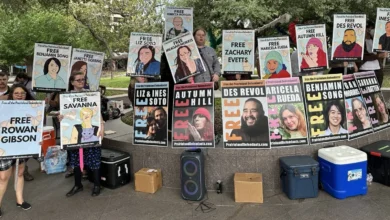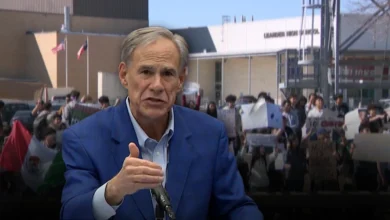
On June 2, the city of Corpus Christi, Texas held a 15-hour meeting to once again discuss the city’s water crisis and once again debate the same fake “solution” that had already been rejected last year. The city remains in a stalemate on any solution to their impending crisis.
Corpus Christi, a city of over 300,000 residents, is expected to exceed its existing water supplies as soon as next summer – the first such instance of its kind in the United States. The media is positioning this devastating crisis only as a result of drought and mismanagement. While these are two of the main causes, this doesn’t tell the whole story: a story of corporate greed, industrial deregulation, fossil fuel driven climate change, and anti-working-class bureaucracy that sits at the intersection of multiple crises of a capitalist system in chaos.
Fossil fuels are responsible for Corpus Christi’s water shortage twice
As the climate crisis becomes more dire, capitalist leaders have failed to offer any solutions that can realistically and scientifically tackle the scale of the problem. Despite consistent increases in extreme weather, droughts, floods, and fires – obvious to anyone living through it, and especially to experts – little to nothing meaningful has been done to rein in the fossil fuel companies driving the crisis and the system that enables them. Instead of polluters being regulated or punished, they are handed the levers of power and left to self-regulate all across the country. Corpus is the logical end result of this type of governance.
Fossil fuel companies aren’t just responsible for the climate change that is causing the drought: they are also the primary industry that is wasting Corpus Christi’s water supply. In fact, only six corporations (Valero, ExxonMobil, Flint Hills Resources, LYB, Citgo, and Oxy) have used over three times as much water as every Corpus resident from 2022 to 2024. During that time, these companies used nearly 57 million gallons of fresh water in comparison to the 17 million gallons used by local residents.
These industries often claim their environmental destruction is necessary for “the economy,” but heavy industry jobs account for less than 3% of all jobs in the Corpus Christi area.
Corpus City Council cracks down on residents while giving corporations a pass
Corpus Christi City Council has shouldered much of the blame for their inaction. But the policy choices they made are not unique. They are many of the same fundamental policy principles that guide every capitalist-run city council in the country: a greenlight for wealthy corporations to use as much water as they please, carve-outs for the biggest water users even as everyday people are forced to pay fines, a lack of funding or willpower to upgrade public water infrastructure, and “band-aid” solutions involving private construction projects that do not meet the scale of the solution.
Corpus Christi has been under constant drought restrictions since mid-2022 and the city could be on the brink reclassifying their drought conditions to a Water Emergency. But the administrative failures started much earlier.
In the mid-2010s, Corpus Christi was also facing drought conditions. In 2018, high-volume water users (e.g. large corporate consumers and rich landowners) negotiated a drought surcharge exemption fee program with the city. This exemption allows only high-volume water users (entities using over 100,000 gallons a day) to pay a voluntary surcharge on top of their regular water bill into a dedicated fund for exclusively new water projects and not into repairing current water infrastructure residents rely on. In exchange, they become exempt from certain drought surcharges, saving them potentially millions of dollars in fees.
Jake Hernandez, a local ecosocialist organizer with Corpus DSA, explained further: “For example, Exxon’s Gulf Coast Growth Ventures pays $125,000 extra a month, based on their 2024 water usage, and avoids having to pay $1.5 million monthly. Valero pays an extra $81,000 with the surcharge exemption fee but is avoiding paying $975,000 a month.” This type of buy-out program for the rich set the stage for today’s crisis.
On December 16, 2024, Corpus transitioned to Stage 3 water restrictions as a part of the City’s Drought Contingency Plan. This is part of a 4-stage program starting with “voluntary” restrictions during a mild drought for Stage 1, and ending a “Water Emergency” at Stage 4. The Stage 3 restrictions include: no lawn watering, limited foundation watering, limited watering of most household plants, covered swimming pools, and designated rules for home car washing.
Even though the majority of the city’s water is used by industry, the city government has placed most of the burden of conversation onto residents, issuing over 1,000 drought fines over the period of a year. As a result, Corpus Christi homeowners actually have decreased water usage by about 25% in the last couple months. Meanwhile, heavy industry has made little or no good-faith effort to curtail its water use. In fact, ExxonMobil has increased its usage every year since 2022.
Administration after administration, city officials have failed to properly plan for the impending water emergency to safely supply the most basic necessity to residents. In contrast, they have been and continue to be quick to give large industry almost completely unfettered access to Corpus’s resources.
Capitalist “solutions” are a mirage: we need socialism
Just as capitalists created the water crisis in the first place, they have also refused to rise to the occasion to solve the problem. A City Council meeting on June 2 debated whether to revive the proposed Inner Harbor desalination plant, which has been touted by business elites, especially Corpus’ extremely unpopular outgoing mayor, as a solution to Corpus’ ongoing water crises.
Community members have vehemently opposed the project since it was first proposed in 2019. The plant would be only blocks away from homes and parks in Hillcrest, a historically Black neighborhood that has faced encroachment from “Refinery Row” – a nearly 15-mile stretch of refineries on the edge of the city – for decades. The water in Corpus Christi Bay, which the desal plant would use if ever built, is contaminated with a significant amount of “forever chemicals” (PFAS) that have been linked to cancer and other health concerns.
Proponents of the plant have offered it up as a silver bullet to all of Corpus’s water issues, even though it would not start providing water until late 2029 at the earliest. Besides the damage it would cause to Black and working-class communities, and the potential risks in desalinating polluted water, the plant would dump salty discharge back into the water that activists say would damage the sea life in the surrounding area.
This is clearly not a solution at all to either present or future problems, yet after seven years, it still keeps coming up for debate in Council. Meanwhile, the real, urgently needed solutions to the water crisis are not even being considered, because it would mean standing up and reining in the unchecked power of fossil fuel giants.
Since profits are prioritized above all else, the decisions that could potentially end the crisis, not just mitigate it, have been left out of the people’s hands. “Humans” in general are not responsible for destroying the planet or emitting the majority of greenhouse gases. Billionaires are. As with everything else in capitalist society, a small number of wealthy elites are responsible for the decisions and consumption that drain most of the planet’s resources.
The capitalist class makes the major choices in regards to energy production, industry, agricultural production, deforestation and land conversion for agriculture and real estate development, transportation, and heating and cooking fuels used in homes and buildings. Everyday people have no say in these decisions under this system.
All-out climate catastrophe is not inevitable. There is a way out of this. We know what the solutions are: rein in the billionaire class and put the resources of society into the hands of the working class. The question is: do we have the political willpower and organization to make that happen?
Feature photo courtesy Andrea Puyol of Corpus Christi DSA.