On Feb. 1, after seven months of public pressure from organizers and community members, Summit County, Ohio allowed a $1 million investment in Israel Bonds to mature without reinvesting.
Israel Bonds are unrestricted loans to the Israeli Treasury. These bonds provide direct economic support for Israel’s apartheid and military infrastructure by funding the military occupation and illegal settlement expansions, as well as the ongoing genocide in Gaza.
Summit County’s decision kicked off a wave of non-investments across multiple counties, including Cuyahoga and Franklin, the counties with the largest Israel Bonds portfolios in Ohio.
Divestment campaigns in Ohio face particular challenges due to a state law against anti-Israel boycotts and deep ties between the Ohio and Israeli healthcare industries, educational institutions and corporations. These conditions make organization and struggle challenging — and the victories significant.
Lessons of the campaign
Organizers from the Akron Palestine Solidarity Collective submitted a records request to the Summit County Fiscal Office in March 2024, requesting all correspondences, meeting minutes and bank statements related to Israel Bonds. In return, they received a 1,013 page document of the requested records. APSC members spent the next several days combing through the documents to better understand the situation
The document included a memo from December 2023, in which Assistant Fiscal Officer Jacqueline Sampsel listed the “pros and cons” of increasing the county’s investments in Israel Bonds. The pros list was almost exclusively financial: the bonds offered high interest rates, Israel (at the time) had a positive economic outlook and the fact that several other Ohio counties were reinvesting.
The cons list was much shorter: investments in Israel Bonds are illiquid, the continuation of the war on Gaza could lead to a decrease in Israel’s credit rating and — most revealing — the Fiscal Office would “need to be prepared for political attention” that could be paid to the investment. Two months into the genocide, with over 15,000 Palestinians killed, the fiscal office’s most pressing concern was unwanted political attention.
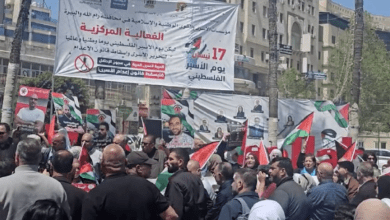
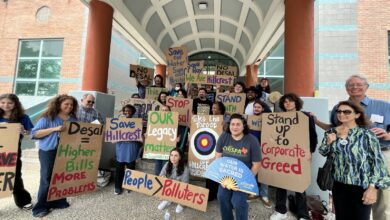
On June 7, the coalition publicized their findings and called for the first time called for activists to “Pack Summit County Council.” Ten days later, on June 17, community members filled the county meeting, using public comment to demand an end to investments in Israel Bonds and a permanent change to the County’s investment policy.
Just one week later, at the next county council meeting, Councilwoman (and Chair of the Ohio Democratic Party) Liz Walters announced that the County had “no plans to purchase Israel Bonds moving forward.”
Organizers determined early on that the goal should be a formal resolution, permanently banning foreign investments in Summit County; however, after threats from Ohio Attorney General Dave Yost, they were required to adjust the goal to simple non-investment.
APSC will not stop fighting for a permanent change to the fiscal policy, but its members understand this change cannot be won at County Council alone.
Analyzing local conditions
The ability to analyze specific local conditions is essential to organizing any successful political campaign. In Summit County, organizers worked with a generally cooperative and sympathetic Fiscal Office and County Council, which meant that escalations such as disruptions or sit-ins would have been counterproductive to the campaign’s goal.
In contrast, in Cuyahoga County, organizers from the Cleveland Palestine Advocacy Community found a political adversary in County Executive Chris Ronayne, who has been unwavering in his support of Israel. After their demands went unaddressed, CPAC escalated their opposition to Ronayne’s resistance through demonstrations outside his house and disruptions during council meetings.
In the fall of 2024, APSC was allowed a meeting with Summit County Fiscal Officer Kristen Scalise, the final authority on investments made by the county. She seemed receptive to the campaign, and even said during the meeting, “If I could divest, I would.”
APSC was given a verbal pledge of non-investment early on in their efforts, at which point they decided to stop making county council meetings “all-calls” to the public, and instead had only a few coalition members attend each public meeting.
This change in strategy allowed the coalition to save public momentum for moments where it mattered, such as on Jan. 26 — the final council meeting before the investment matured on Feb. 1 — while also continuing to promote other organizational efforts for Palestine at council meetings, such as the Nakba Remembrance Day program.
The path forward
On Feb. 24, organizers received official confirmation of non-investment in Summit County, and were able to immediately publicize the victory.
On March 10, Summit County’s Deputy Fiscal Officer Mike Migden told Ideastream that pro-Palestine organizing played a role in the county’s decision to not reinvest.
This victory does not mean APSC’s work is done. On Aug. 1, another $2 million investment in Israel Bonds will mature in Summit County. After that, a final $1.5 million investment will mature on Feb. 1, 2026.
Beyond the $62.8 million still invested at the county level, in February, State Treasurer Robert Sprague invested $35 million in Israel Bonds, bringing the Ohio Treasury total to $269 million. Organizers have responded with a formal complaint to the Ohio Ethics Commission.
Supporters of Israel in the State Legislature recently introduced multiple aggressively pro-Israel bills, including House Bill 188 to “Create the Ohio Israel Trade and Innovation Partnership,” and Senate Bill 87, which would introduce the International Holocaust Remembrance Association definition of antisemitism (which conflates the state of Israel with Jewish people) into Ohio law.
SB 87 is the third bill to attempt to introduce this definition since November 2024. Organizers from across the state came together to defeat both previous iterations of the law, first as SB 297 and again when it was snuck into HB 315.
Divestment from Israel Bonds is just the first step. Organizers in Ohio are committed to fighting until all of these ties are severed permanently, and until Palestine is free.
Feature image: Ohio organizers meet to discuss divestment campaigns. Liberation photo