Donald Trump made his disdain for people with disabilities clear when he mocked a disabled reporter during his first run for president. Now during the second Trump administration, Congress just passed his budget reconciliation bill that threatens the health, education and financial well-being of disabled people, all while further enriching the ultra wealthy, big corporations and the military.
While the budget bill, which Trump called “One Big Beautiful Bill,” did not specifically mention disability services, many of its provisions, especially cuts to Medicaid, will result in the slashing of essential services that disabled people need to survive.
In many ways, the Senate version of the bill, which passed July 1, is even worse than the one the House passed May 22. The House bill denies Medicaid coverage to childless adults, aged 19 to 64, who cannot document that they work at least 80 hours a month. This will result in an estimated 7.6 million people losing their health care coverage. The Senate version also requires parents of children aged 14 and over to document the work requirement, resulting in a further 160,000 to 380,000 people losing coverage, mostly due to the onerous reporting requirements. This Senate version of the bill went back to the House for approval on July 2, and the House passed it the next day sending it to Trump’s desk to sign.
Medicaid is the primary source of funding for health and long-term care coverage for more than one in three Americans with disabilities, including 2.3 million children, 8.8 million working-age adults and 4.4 million seniors, according to KFF.
The Centers for Disease Control and Prevention reports that more than one in four U.S. adults, or 28.7%, have some type of disability, including 13.9% with a cognitive disability and 12.2% with a mobility disability.
KFF notes that among working-age people with disabilities, almost half do not work at all and only one-third work full time (defined as more than 35 hours per week). In comparison, more than 65% of adults without a disability work full time and only 16% do not work at all. Disabled people are also much less likely to have employment-based health insurance coverage.
In a letter to the Senate, signed by more than 730 organizations, the Disability and Aging Collaborative along with the Consortium for Constituents with Disabilities, called the proposed changes to Medicaid “dangerous and life threatening.” They state: “Qualifying for Medicaid with a disability is a strict and narrow pathway that excludes many people with disabilities.”
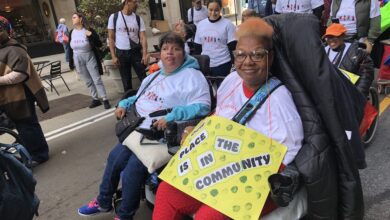
Disabled Americans protest cuts to Medicaid and other essential programs on Capitol Hill in June 2025.
Onerous paperwork requirements already make it hard for disabled people to access the care they need and qualify for. This bill’s passage will only make matters worse. The letter states: “Processes to prove eligibility are often inaccessible for people with mobility and intellectual disabilities due to the requirements for signed physical paperwork from far-away offices or the lack of plain-language resources on applying.”
In addition to work requirements, changes in Medicaid funding will disproportionately hurt disabled people. Medicaid is funded jointly by the federal government and the states, with the federal government picking up 69% of the tab. States administer their Medicaid programs and fund their portion of the costs within broad parameters set by the federal government. States have multiple ways of funding Medicaid, but all states except Alaska use some form of provider assessments as a primary source of funding. Provider assessments are taxes on hospitals, nursing homes and managed care organizations.
The Senate version includes strict limits on the use of provider assessments which will drastically cut states’ Medicaid budgets resulting in benefit cuts. Federal regulations require states to provide certain services under Medicaid, however, others are optional. According to the DAC/CCD letter, the vast majority of optional Medicaid spending — 86% — goes toward services and supports for people with disabilities and older adults, with home and community-based services accounting for more than half. Without Medicaid funding, these vulnerable disabled and elderly people would lose the supports they need to stay in their homes.
These cuts will threaten the health and independence of disabled people, seniors and their caregivers. Katy Neas, CEO of the Arc, a nonprofit which serves those with disabilities, states: “It will mean people with disabilities ending up in emergency rooms instead of getting preventive care. It will mean people being forced to live in institutions or become homeless. It will mean caregivers unable to support their loved ones … Medicaid isn’t just a line item in a budget — it’s a lifeline.”
Another lifeline that has been helping keep disabled as well as elderly people in their homes is the Administration for Community Living, which has provided a broad array of services including Meals on Wheels and other in-home supports, legal assistance, and help to families of children with disabilities as well as funding more than 11,000 senior centers nationwide.
In April, the Department of Health & Human Services fired nearly half of the ACL’s staff and now the agency will be eliminated altogether. Some programs will move to the HHS’s Administration for Children, Families & Communities or the Centers for Medicare & Medicaid Services. These changes will at best result in disruptions to vital programs and services, and are likely to lead to further funding and service cuts.
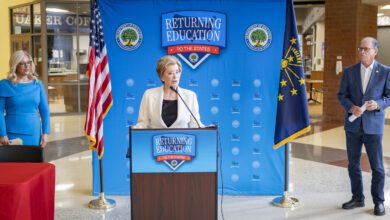
One line item that is not being cut is funding for the Individuals with Disabilities Education Act, known as IDEA. However, the Brookings Institution states that “changes to how IDEA funding is structured could have far-reaching implications for students with disabilities.” They note that under IDEA, the federal government provides approximately $15 billion per year to states and school districts, making it the second largest federal funding source for public schools.
Under the new rules, funds for existing IDEA programs and services would be consolidated to give states and school districts “greater flexibility to support students with special needs.” However, this new “flexibility” bypasses IDEA’s established rules and protections and eliminates much federal oversight as to how the funds are being spent.
The budget also eliminates funding from some lesser-known programs such as the University Centers for Excellence in Developmental Disabilities, known as UCEDDs, which have existed in every state for more than 60 years. According to the Association of University Centers on Disabilities, “UCEDDs evaluate children with autism, run early intervention programs, train community professionals to work with people with developmental disabilities, provide training and disseminate information to families and self-advocates — all to increase the independence and self-sufficiency of individuals with disabilities.”
It is hard enough for people with disabilities to live self-sufficient and independent lives in a capitalist economy that prioritizes the ability to make a profit and marginalizes those who are seen as less productive. This budget bill will only make life harder for disabled people, while giving windfall tax cuts to the rich and hundreds of billions of dollars to the military and ICE. We need to continue to fight the Trump agenda and bring about a society that guarantees all people, regardless of disability, their basic human rights and the ability to live full and dignified lives.