The FIFA World Cup is one of the single most popular sporting events in the world. Nearly five billion people engaged with the 2022 tournament in Qatar, making it an event that connects people across national and cultural divides. Every four years, billions of people cheer for teams from countries they may never visit, celebrate players who speak different languages, and participate in a global festival that transcends borders, nationalities, racial and gender lines. This global game of the working class is a game of the street, the favela, refugee camp, and school yard.
Yet as the 2026 World Cup unfolds across the United States, Mexico and Canada, the world’s games are increasingly colliding with the realities of borders, war, and profit.
What should be a celebration of international solidarity has instead been overshadowed by visa restrictions, anti-immigrant policies and controversies. From forcible training base relocations to request to pardon U.S. players for red-card penalties to U.S. Visa denials to hours long CBP detainments and interrogations. The Trump administration has been allowed to meddle in on who is allowed to participate in soccer’s biggest stage.
This provides a clear contradiction: Soccer belongs to the world, but the United States gets to decide who gets to experience it.
The World Cup puts geopolitics into focus
This first exploded into public view when a single video of Senegal’s national team undergoing security screening on an airport tarmac went viral. Online, many viewers described the players as being treated “like criminals,” with some accusing U.S. authorities of racial discrimination against one of Africa’s most successful soccer nations.
Subsequent reporting showed that some details circulating online – including an image showing coach Pape Thiaw being frisked appeared to be AI-generated – were inaccurate. The Senegalese Football Federation clarified the team was part of a pre-arranged boarding in Raleigh, NC. But the outrage surrounding the video was revealing, showing that many know the history of racist profiling while traveling in the United States.
Why did so many people immediately believe Senegalese players had been singled out?
Many people saw the incident as part of a broader pattern of racism and xenophobia. African and West Asian travelers have long faced heightened scrutiny, visa restrictions and unequal treatment when traveling internationally. The Trump administration’s anti-immigrant policies and nationalist rhetoric have only intensified these fears, making the viral reactions about far more than a single airport incident.
The World Cup has brought these contradictions into sharp focus. Of the 48 countries participating in the FIFA World Cup, Iran, Haiti, Côte d’Ivoire, and Senegal are subject to travel restrictions.
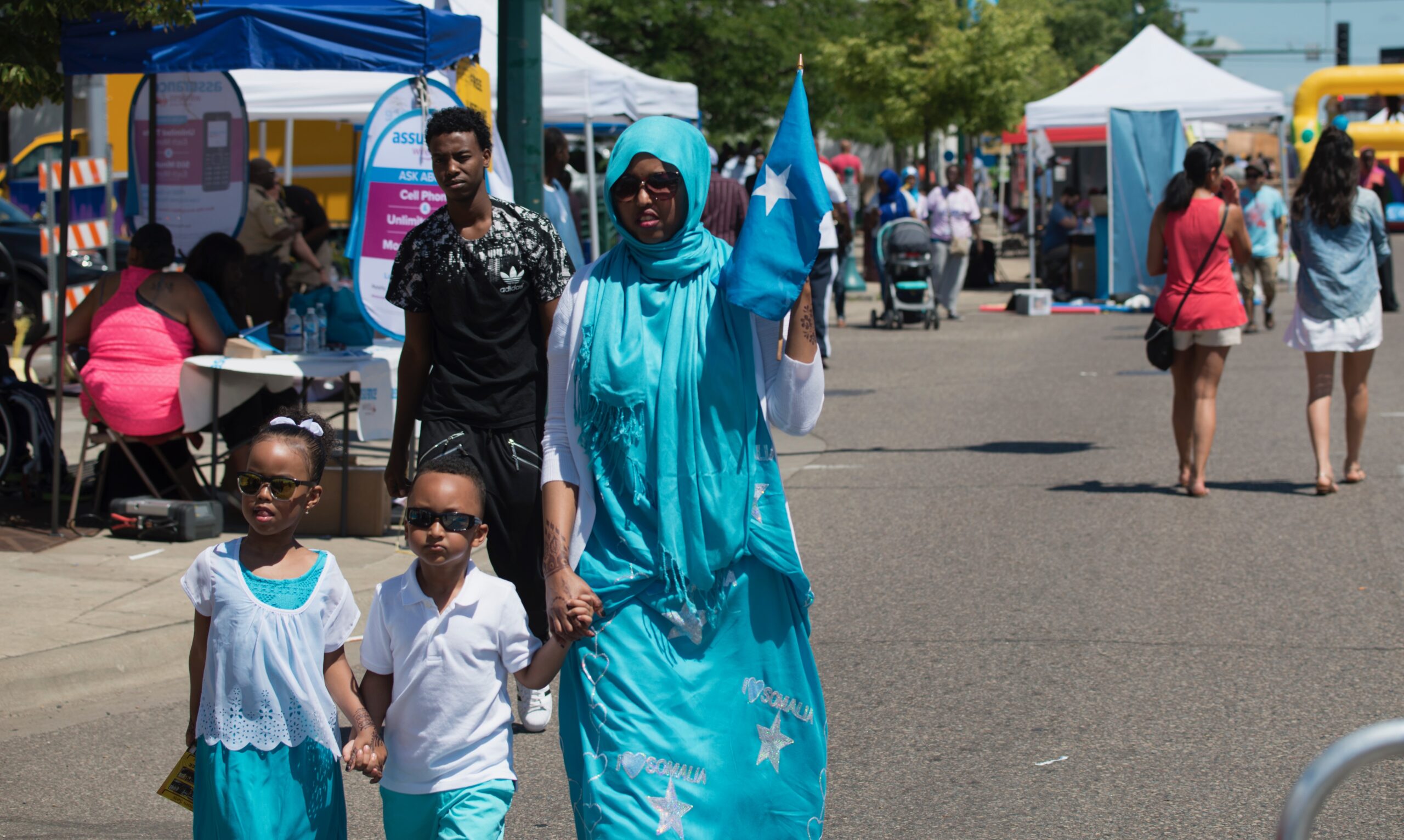
Somali referee Omar Abdulkadir Artan – Africa’s best referee – was interrogated for 11 hours and ultimately denied entry to the United States on “suspected association with terrorist organizations.” This is despite Artan holding both a diplomatic passport and a single entry visa. Canada made public gestures stating they would accept Artan to referee. However, FIFA officials are required to attend an on-pitch training camp that happens to be in Florida. Somali people have been a major target in Trump’s deportation campaign for the last several months. Somalia is one of 19 countries under a complete entry ban which took place in June 2025. Last December, Trump referred to Somalia as “barely a country” while calling Somali people “garbage.” His degenerative remarks led up to Operation Metro Surge in the Twin Cities, which witnessed the largest mass rejection of Trump’s anti-immigrant agenda.
Even though the U.S. and Israel started the war in Iran, the Iranian national team is being punished by the U.S. government. As a result, the Iranian team has been forced to relocate its training base in Arizona, U.S. to Tijuana, Mexico. Logistical hurdles have been imposed on Iran’s national team including long travel hours each day from Mexico to their matches and support staff (coaches, media, and medical) denied entry into the U.S. Despite the exhausting challenges, the team has been met with widespread solidarity in Mexico and amongst fans at their Los Angeles match. This showcased international solidarity that has been forged between many countries but especially those in the Global South who have felt the Imperialist wrath of the United States.
Supporters of teams such as Senegal and the Ivory Coast faced difficulties obtaining visas and traveling to matches. At best, some are granted single entry visas which are inadequate if teams in Mexico or Canada are playing their games with the United States. They cannot follow their teams to locations because restrictions on reentry will apply.
A tale of two World Cups
The inequalities exposed by this World Cup extend beyond visas. Wealthier federations have been able to travel with larger staffs, specialized nutritionists and additional resources while many teams from Global South countries are under-resourced placing them at an economic disadvantage. From Orlando Gill, Paraguay’s goalkeeper who sold his jersey to pay for his son’s medical bills to Cape Verde’s Vozinha who is a former electrician. These stories highlight that the uneven material conditions shape up international competition. When not every country has an abundance of resources like Western countries do; it begs the question, does every team compete under the same playing field? Football may be played on the same field, but countries do not arrive there on equal footing.
FIFA frequently presents itself as politically neutral, insisting that soccer exists above politics. But neutrality becomes difficult to display when wars alter tournament logistics, immigration policy determines who can travel, and entire populations are excluded from the world’s biggest sporting event. Iran’s experience at the World Cup has been a site for unabashed exclusion and intimidation.
FIFA’s own regulations have long held that government interference in soccer can be grounds for suspension or disqualification. Yet when the United States’ political decisions reshaped this tournament, from immigration restrictions to travel barriers, FIFA accommodated the host nation now rather more than ever before. Controversy arose after FIFA president Infantino pardoned U.S. men’s national team striker Folarin Balogun for this red-card was cleared after Donald Trump urged him to review the case personally. FIFA has permitted Balogun to play without rescinding the red-card that typically leads to a probationary period of one year.
Who gets to represent the country on the field cannot be separated from the broader struggle over who is allowed to call the country home and on what terms. The World Cup has always been political because borders are a repressive tool, used to divide peoples, countries, and give legitimacy to ruling class interests like the United States.
The paradox lies in the United States white washing tale that this is a nation “built” on immigrants while actively conducting one of the most targeted attacks on immigrants in modern day history. For instance, Folarin Balogun was born in New York to Nigerian parents and raised in England. Balogun scored twice in the tournament opener, giving the U.S. a great start to the World Cup. This is happening amid Trump’s Executive Order to end birthright citizenship. The Supreme Court delivered its decision and could lead to future implications for players like Balgoun in the 2030 World Cup. The implications stretch far beyond soccer, but the contrast is striking. The United States celebrates immigrant talent and global stars while political leaders seek to narrow who belongs within the nation’s borders.
Who gets to represent the country on the field cannot be separated from the broader struggle over who is allowed to call the country home and on what terms.
For many fans, even if they can secure entry, soaring ticket prices have made attending the tournament financially inconceivable. Meanwhile, FIFA continues to reap enormous profits from the tournament. The organization earns billions from broadcasting rights, sponsorship deals, and egregious ticket sales while presenting itself as the steward of a sport built by ordinary people.
Yet the controversies surrounding the 2026 World Cup raise an unavoidable question, who is the tournament really for?
Is it for the fans who save for years to attend only to face visa denials and skyrocketing prices? Is it for the players whose careers can be disrupted by geopolitics? Or is it for the corporations, broadcasters and executives who profit from soccer’s global appeal?
Overwhelming international solidarity on display
Soccer’s immense popularity points towards a different possibility. Historic matches such as Cabo Verde vs. Argentina, Norway vs. Brazil, to Mexico vs. England. These games created a vibrant display of international solidarity. People from outside these nations started to view themselves as people from Latin America, Africa, and Asia. The people cheered for their wins and grieved their losses. At the writing of this article the last global south countries that remain in the World Cup are Morocco and Argentina.
Every four years, the World Cup reminds us that working class people across the globe are connected by far more than what separates them. They celebrate one another’s cultures, mourn defeats together, and dream together through the world’s game. This presents us with a true sense of unity that is intentionally kept from us by the billionaire and elite class.
The anger surrounding this World Cup is not simply about visas, airports, or ticket prices. It reflects a growing rejection of a world where nationality, wealth, and political power determine who gets to participate in one the world’s most beloved sporting events.
Soccer alone cannot abolish borders. But the love people have for the game reveals something important. Working class people across the globe already possess an intrinsic desire for internationalism. The challenge ahead of us all is building up the world that is able to create it; a world that promotes international cooperation and social-political projects that reflect our working class values.
Featured Image: Cape Verde’s Dailon Livramento celebrates with his teammates after the match [Troy Taormina/Reuters]