President Trump, in his January inaugural address, claimed he would fight for America’s children saying, “to every parent who dreams for their child and every child who dreams for their future, I am with you, I will fight for you, and I will win for you.” But five months later, it is obvious that this administration is fighting a war on America’s children.
The administration’s budget reconciliation bill, which Trump calls “One Big Beautiful Bill,” is filled with cuts to vital programs affecting children like Medicaid, the Child Health Insurance Program and the Supplemental Nutrition Assistance Program. Massive layoffs at the Department of Health & Human Services are gutting programs like Head Start and the Low Income Home Energy Assistance Program, and the administration is set on dismantling the Department of Education altogether.
According to the Congressional Budget Office, the reconciliation bill would cut Medicaid by more than $800 billion, the largest cut in the program’s history. These cuts would fall disproportionately on children. Medicaid is the largest single source of health insurance in the United States serving more than 71 million low-income Americans. It covers approximately 40% of all children and more than 40% of all births (nearly 50% in rural areas), according to the American Hospital Association.
Medicaid and the Child Health Insurance Program, known as CHIP, are administered by the states under federal guidelines. CHIP covers children whose families earn too much to qualify for Medicaid but cannot afford private insurance. Proposed changes to Medicaid and CHIP in the budget reconciliation bill would jeopardize health care access for more than 37 million children, according to First Focus Campaign for Children.
It is unconscionable that children would lose access to health care, especially since the United States ranks near the bottom in terms of child health outcomes — including infant mortality rates and life expectancy at birth — when compared with other rich nations. The United States’ poor performance is caused by stark inequality and the lack of universal health care. Poor and non-white children need greater access to health care, not less.
The bill would also cut the Supplemental Nutrition Assistance Program, known as SNAP which replaced Food Stamps, by nearly $300 billion. SNAP provides basic food assistance to one out of every five children in the United States. The Center on Budget and Policy Priorities estimates that more than 2 million children will see food assistance to their families cut substantially or terminated due to harsh new eligibility and reporting requirements.
Despite the fact that the United States produces more than enough food to feed its population, 47 million people are food insecure, including 14 million children. Cutting food assistance to hungry children is not just cruel, it is also short sighted. Hungry children have more health problems, perform worse in school and have lower income outcomes according to the CBPP.
The bill will also penalize children based on their immigration status. It contains a provision that would require both parents to have a Social Security number in order to qualify for the federal Child Tax Credit. This could strip the credit from millions of children, since children of mixed-status families, where one parent is undocumented, or U.S. citizen children of undocumented parents or parents with non-working visas, such as students, would be ineligible. The credit, which now amounts to $2,000 per eligible child has been shown to lift children out of poverty. Once again, this is a direct attack on poor and immigrant children.
In addition the bill contains a provision that would penalize states from providing health coverage to undocumented immigrants by cutting the amount the federal government pays the state, in effect doubling the state’s share of Medicaid expansion costs. Currently 14 states and Washington D.C. provide Medicaid coverage to undocumented immigrants. KFF estimates that more than 1.9 million people, including many families and children, would lose coverage under the new bill.
One winner in the bill is Immigration and Customs Enforcement. The bill would provide nearly $80 billion for internal immigration enforcement, including $45 billion for immigration detention facilities. ICE raids, and the ever-present threat of immigration action, have a serious effect on the physical, emotional and financial well-being of children.
Roughly 6 million children share a home with at least one family member, often a parent, who is undocumented. These children are more likely to experience mental health problems including PTSD, chronic medical conditions including heart disease and decreased school attendance.
As if this bill were not enough, the administration is also attacking children, especially poor and immigrant children, through cuts to the Department of Health & Human Services and the proposed elimination of the Department of Education.
In April, DHSS laid off the entire staff of the Low Income Energy Assistance Program, a $4.1 billion program that helps approximately 6 million poor households pay their heating or cooling bills. Low-income households are often energy burdened due to living in older, poorly insulated homes. And children, like the elderly, are more susceptible to extreme temperatures. Even with the program, approximately 23% of households reported keeping their homes at unsafe temperatures due to rising energy costs.
The effects of cutting energy assistance will be disastrous to children. Extreme heat is the number one cause of weather-related deaths in the United States, and this will only get worse as the climate becomes hotter, especially in the South. Without help keeping the power on, children will suffer from more health problems like asthma, and more children will die.
While the United States lags behind other rich countries in providing comprehensive services to children, especially low-income children, there is one program that has had a proven track record — Head Start, a program that serves low-income children through age five. Since the program’s inception 60 years ago, it has prepared nearly 40 million children for kindergarten, which has improved high school graduation rates, and strengthened children’s overall health, earning and development.
Yet this program is also in the Trump administration’s gunsights. Since taking office the administration has frozen federal grant funding to the program and closed five regional offices that oversee Head Start programs in 22 states and five U.S. territories, jeopardizing access for 800,000 children and families who rely on the program.
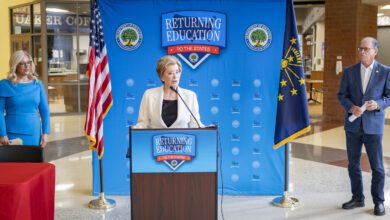
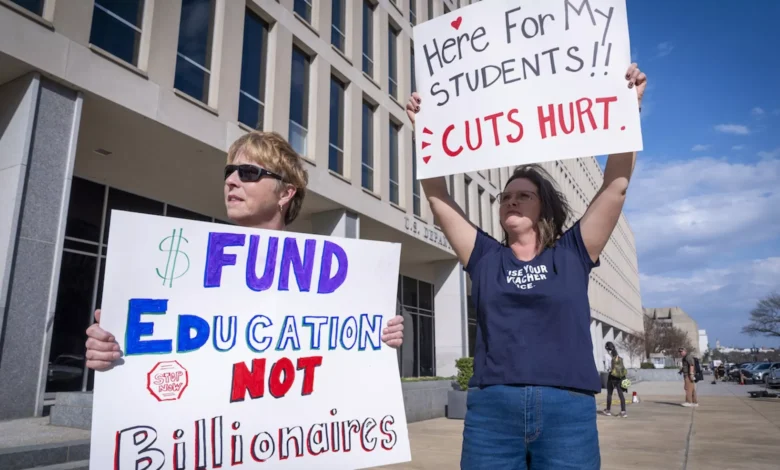
In March, President Trump signed an executive order to dismantle the Department of Education as part of the GOP platform laid out in Project 2025. Public schools serve 90% of all U.S. students and 95% of students with disabilities. While it would take an Act of Congress to officially close the Department of Education, the administration can still strip it of its resources.
Millions of low-income and disabled students rely on the Department of Education for civil rights protections against discrimination based on race, gender and disability. Gutting the department would also affect Title I, which directs money to schools with high concentrations of children living in poverty.
Trump says he is fighting for America’s children, but it is clear that he is waging a war against children, especially poor and immigrant children. While it is important that we fight to preserve the programs we have that protect children, we must also work to build a society that meets the needs of all children. No child should have to live in fear that they or a family member will be deported. And all children deserve free and appropriate education and health care, and the right to live in safe homes and communities.