Nashville has seen this playbook before. A deal is negotiated quietly, framed as a neutral tool for “public safety,” and rushed forward as if opposition is a formality. Only later do residents learn how much public power is being handed to private interests – and who will bear the cost.
The latest version of this pattern is a proposed memorandum of understanding that would expand police surveillance through a public-private partnership between the Metropolitan Nashville Police Department and the Nashville Downtown Partnership. The agreement would formalize police access to privately owned surveillance infrastructure while allowing public funds to support technology that community members say lacks meaningful oversight or public accountability. Supporters have framed the proposal as a way to improve safety downtown, but critics argue the agreement prioritizes control over care.
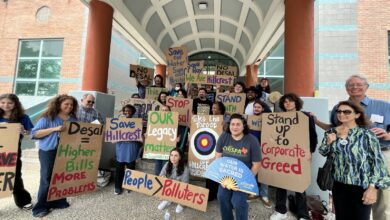
On Dec. 16, Metro Council deferred a vote on the agreement following sustained community opposition. Ahead of the meeting, residents protested outside council chambers against both the surveillance plan and the privately backed “Music City Loop” tunnel project. Afterward, many entered the chamber to speak and show solidarity during public comment, drawing connections between the two proposals and the broader development agenda reshaping the city.
While the deferral did not stop the surveillance agreement outright, organizers say it revealed growing discomfort with how the proposal came forward and what it represents. Rather than a routine administrative step, the delay signaled that the agreement has become politically contested.
Under the current MOU, MNPD would gain expanded access to surveillance tools coordinated through a private entity, blurring the line between public authority and private control. Critics argue the agreement was developed without a public hearing, despite Metro code requiring community input before the city enters surveillance procurement agreements. They warn the document places few limits on how surveillance technologies could be expanded or used in the future, raising concerns that the agreement could serve as a foundation for broader monitoring with minimal accountability.
Community members also warned that expanding police access to private camera networks raises the risk of data-sharing beyond the city. Similar surveillance systems in other cities have been used to connect local policing with federal agencies, intensifying fears among immigrant communities already facing increased ICE activity here in Nashville.
For many residents, the concern is not abstract. Surveillance infrastructure, they argue, does not exist in a vacuum – it follows patterns of displacement, over-policing, and exclusion already playing out across Nashville. Communities experiencing rising rents, evictions, and aggressive redevelopment are often the same ones most impacted by increased police presence and monitoring.
“This MOU shifts public authority into private hands and expands the machinery used to control the very people displaced by this agenda,” said Craig Bardo, a member of the Party for Socialism and Liberation, during public comment. “That isn’t governance for the public – it’s administration on behalf of private power.”
Bardo’s remarks echoed a theme raised repeatedly throughout the evening: that city leaders have approved large-scale redevelopment projects, stadium deals, and corporate partnerships that accelerate displacement, while offering surveillance as the primary response to the instability those policies create. Rather than addressing the root causes of harm, speakers argued, the city continues to invest in tools that manage the fallout.
Nader Dagher, a Nashville resident and professor of communication, warned that framing social problems as security threats leads to repression rather than safety. “Surveillance is not a solution to social problems,” he said. “I see surveillance only as an introduction to more political repression.”
Other speakers called for a different approach – one rooted in community investment rather than enforcement. They urged council members to fund housing, mental health services, public infrastructure, and violence prevention programs that address harm before it occurs, emphasizing that safety grows out of stability and access to resources, not cameras and data collection.
Although council members did not explicitly cite public opposition when deferring the vote, the outcome disrupted what many expected to be a routine approval. Organizers say the delay reflects the impact of coordinated pressure, both inside and outside the chamber.
The fight over the surveillance agreement is far from over. Community members warn the MOU could return with minor revisions and the same underlying structure unless residents remain engaged. For those organizing against it, the issue is about more than cameras or contracts. It’s about who Nashville is being built for, and who is being watched as that transformation unfolds.
As public-private surveillance partnerships expand in cities across the country, Nashville has become a local test case. What happens next will help determine whether the city continues treating surveillance as the answer to crises created by policy choices – or listens to the residents pushing back.
Feature image: Nashville residents protest outside the Metro Council meeting. Credit: Liberation photo.