On May 29, Chicago police shot and killed 19-year old Nathaniel Fejerang in Chicago’s Humboldt Park, a working class neighborhood on the West Side of the city. Chicago police claim they attempted to detain Fejerang for an investigatory stop before he ran from them, but they have not said what the stop was for. Police chased Fejerang into a neighbor’s yard and then shot him.
The Chicago Sun-Times reported that a neighbor heard Fejerang shout, “I’m not resisting, I’m not resisting, I’ve been shot,” and saw Fejerang bleeding from the head. A police officer was also reported to have been shot in the incident.
The Chicago Office of Police Accountability, an independent city agency established to investigate the Chicago Police Department, stated in a press release that, “a round was discharged, striking an officer in the leg,” and did not say that Fejerang fired any shots. The Sun-Times reported that the neighbor and Fejerang’s father were on the scene after the shooting and, “said officers appeared more concerned with giving aid to the officer who was shot in the leg than helping Nathaniel Fejerang.”
This was the second time in May that Chicago police shot someone after a chase. On May 10, COPA released a statement saying that as police were dispersing a large gathering of people in the Austin neighborhood, another working class area on the West Side, they saw a man run and pursued him. The man eventually fell and dropped a gun. A CPD statement says that the man “turned on [police] with a firearm in hand,” but COPA’s account merely says the “individual appeared to reach for a gun.” A police officer then shot the man, who survived the shooting.
Violating foot pursuit policy?
One of the many questions these shootings raise is if Chicago police are still following the foot policy that was established in 2022. The current foot pursuit policy states:
“Justified Pursuits. The mere act of flight alone by a person will not serve as justification for engaging in a Foot Pursuit. Department members are prohibited from basing an investigatory stop solely on a person’s response to the presence of police, such as a person’s attempt to avoid contact with a Department member or flight.”
Police have not revealed why they wanted to detain Fejerang, so currently the pursuit of Fejerang seems to be unjustified. Police are not meant to pursue people who are only suspected of minor offenses. The shooting on May 10 seems to be unjustified under the current policy, as the released information by CPD and COPA seems to imply that police pursued solely because a man ran from them.
Why Chicago limited police pursuits
While department policy is not the law, it is not a surprise that CPD regularly violates policies designed to protect the public. What should be remembered is that the current foot pursuit policy of Chicago police was a concession to the struggle for justice against police abuses. Chicago police ignoring that policy should be seen as an attempt to roll back reforms meant to keep communities safe.
In March 2021, CPD officer Evan Solano chased down, shot and killed Anthony Alvarez after he ran from an encroaching police car. The killing of Anthony Alvarez, along with the killing of 13-year-old Adam Toledo by CPD just days before, catalyzed months of protest against Chicago police and demands for the officers involved to be charged and fired. Despite a recommendation by COPA, Solano was not fired. The Cook County State’s Attorney at the time, Kim Foxx, refused to press charges. Foxx and COPA both stated that Solano had violated the old foot pursuit policy when he chased Alvarez.
The revised Chicago police foot pursuit policy, which was released in June 2022, was the concession made to the protests for justice for Alvarez and Toledo. The policy is more explicit about when foot pursuits are unjustified, and can be a tool to challenge Chicago police narratives after shootings and other abuses. Despite fanfare from local media when the new policy was released, no outlets have questioned what appears to be violations of the foot pursuit policy in recent weeks.
In the United States, there is a consistent pattern that police and their allies will roll back reforms when they feel the struggle to hold them accountable is in a lull.
Reactionary resurgence
The recent moves to empower police that began under Biden and accelerated under Trump have created an environment where police and their supporters feel emboldened to act more aggressively and ignore the legal limits to their power. The ruling class made a consistent push to rehabilitate and further fund police after the historic 2020 uprisings against racism and police brutality sparked by the murder of George Floyd.
This reactionary embrace of the police can be seen in political developments in Cook County, which includes Chicago. Last year, Kim Foxx decided not to run again for State’s Attorney and Eileen O’Neill Burke won the election promising to govern as a harsher conservative. Burke has pledged to pursue more aggressive charges for protests and shoplifting, dropped charges against a suburban police officer who beat a 17-year-old Palestinian boy during an arrest and allowed police patrolling Black neighborhoods to expedite felony gun charges without checking with a prosecutor.
Police apologists in Chicago often hold up recent restrictions on police foot pursuits as a reason for crime and violence. However, murders in Chicago have consistently decreased since 2021 and this April saw the lowest number of murders since 1962. These declines are in part because of community supported violence intervention programs and the reintroduction of more mental health services. Police pursuing people just for running often unnecessarily escalates a situation and results in injury and death.
People’s movement
Under the current system any reform, not just those regarding the police, is always at risk of being rolled back. In the current political environment, it is not surprising that police are attempting to reverse reforms that they oppose. Keeping communities safe from police violence means ultimately ending the system of policing that protects property and terrorizes oppressed communities, and replacing it it with a system that prioritizes people and their needs over profits.
The family of Nathaniel Fejerang has a GoFundMe to cover the costs of a memorial, funeral and burial.
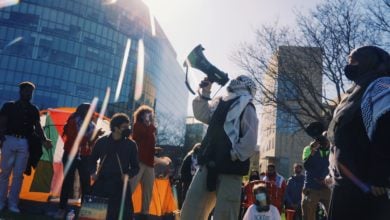
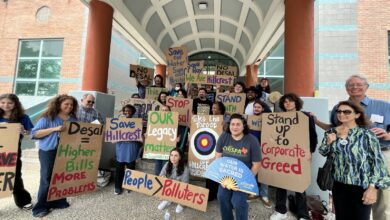
Feature photo: Protesters demand justice for Anthony Alvarez, who was shot by Chicago police during a foot chase in 2021. Liberation photo.