The original settlement
President Trump’s rollbacks of what he calls “DEI policies” will now impact the first environmental justice settlement citing civil rights policy in American history. In 2023, a settlement was reached in Lowndes County, Alabama to address a sanitation crisis that was described by United Nations special rapporteur Philip Alston as homes surrounded by “cesspools of sewage that flowed out of broken or non-existent septic systems.” The settlement, while late coming, was historic in its advocacy for Black residents fighting the uphill battle of environmental racism and underfunded infrastructure by local and state governments.
Due to a lack of sound infrastructure, residents of Lowndes County have had to bear the costs of expensive sanitation infrastructure themselves or face citations or even jail time. As an alternative, residents often installed “straight piping”— a form of sanitation that results in untreated sewage flowing directly from their toilets to their yards. The settlement directed the Alabama Department of Public Health to launch a public health awareness campaign, work with the Center for Disease Control to assess health risks from raw sewage exposure, and conduct a comprehensive assessment to select the correct septic and wastewater management systems for households within Lowndes County. The 2023 settlement also suspended criminal charges for residents who “lack the means to purchase functioning septic systems.”
Trump’s administration has cited this settlement as an “illegal DEI and environmental justice policy” and has moved to terminate this agreement under Executive Order 14151–”Ending Radical And Wasteful Government DEI Programs And Preferencing.” But as those who understand the needs and current reality of the working class, we recognize that we need more civil rights and environmental justice, not less. The Trump administration is not just racist in its wanton dismissal of the needs of the Black community in southern Alabama — these policies are a natural outcome of their class interests. Trump and his billionaire buddies want to gut as many civil rights and environmental regulations as possible to pave the way for even greater profits for their businesses, at the cost of immiserating tens of millions of workers and rendering the already damaged planet even more unlivable.
This “anti-DEI” executive order does not just affect the people of Lowndes County, but the whole country, as the Trump administration seeks to close all environmental justice cases, programs, services and activities.
The history of racism in Alabama’s Black Belt
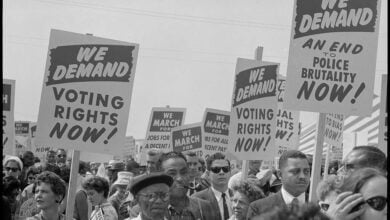
The severe lack of infrastructure in Lowndes County is just one of many cases of systemic racism impacting the lives of Black Southerners. Lowndes County finds itself in between Selma and Montgomery, Alabama, a junction on the historic march for voting rights that led to violent incidents including Bloody Sunday, where peaceful civil rights protestors were brutally beaten by Alabama State Troopers and tear gassed for marching to end the Jim Crow apartheid system. The county was also home to the Lowndes County Freedom Organization, which in collaboration with a forerunner of the Black Panther Party helped Black residents vote and run for political office.
The modern lack of sewage infrastructure is just a small component of environmental racism in the Black Belt — where Lowndes County is located — a region known for its rich, “black” soil that lent itself well to growing “cash crops” such as cotton during the centuries of chattel slavery. The sanitation crimes in Lowndes County are not simply a result of being ignored by corporations or other capitalist entities, but a strategic decision by the state to not invest in the needs of its Black population.
The Black Belt exposes much of the worst in American spending on infrastructure, public health, education, and more. It is a reminder that many African Americans live in what are often considered “developing nation” conditions, well below the expected American standards.
In economically depressed communities like the Black Belt, residents are more likely to become criminalized and be thrown into the prison industrial complex. In Alabama specifically, the conditions of the state prisons are considered the worst in the country. Home to one of the highest incarceration rates in the country, Alabama prisons are consistently understaffed and overcrowded, which helps fuel high rates of inmate violence, staff-on-prisoner sexual abuse, neglect of prisoner health ailments, and drug use. The loophole in the 13th Amendment that allows for the continuation of slavery as “punishment for a crime” is a stark reminder that the systems of white supremacy and economic subjugation are still alive and well in the Black Belt today.
Trump’s plan to use anti-DEI for the billionaire agenda
For Trump, “DEI” is a catch-all for any previous policy that works to overcome racial injustices for any oppressed group, but particularly Black people. It is a cover for the attacks on Black economic, civil, and social progress that undermine America’s racial hierarchy. Trump’s billionaire agenda seeks to push back on all progress attained over the last half century dating back to the Civil Rights Movement.
In this instance, the boogeyman created by the term “DEI” is actively undermining the right to sanitation and a safe environment in Lowndes County, which is over 70% Black. “Environmental racism” has become another concept under attack by the Trump administration in their destruction of progress for the pursuit of tax cuts and further billionaire enrichment.
Feature image: A Lowndes County mobile home with a failing septic system resulting in sewage flooding the front door walkway. Credit: Flickr/usdagov (public domain)