The memorandum of understanding between the US and Iran marks the end of the U.S.-Israeli war on Iran, a war that failed to achieve any of its stated objectives. Trump and Netanyahu set out to disarm Iran, bring down its government, and remake the region in their favor, and the whole world has watched them fall short of every one of those aims. Iran has emerged from the war stronger, its government intact and its geostrategic position improved, while the United States has been forced to concede to terms it had refused to consider for years. The most powerful military on earth bombed a country for more than three months and could not impose its will. This will be remembered as a geostrategic defeat for U.S. imperialism.
On June 17, Donald Trump signed a memorandum of understanding between the United States and Iran. It brings a provisional close to more than a hundred days of a U.S.-Israeli war launched in late February, a war that killed thousands of civilians in Iran, killed more than three thousand people in Lebanon, drove over a million from their homes, and inflicted vast destruction on both countries.
The memorandum lists fourteen points. It declares “the immediate and permanent termination of military operations on all fronts, including in Lebanon,” and binds each state to “respect each other’s sovereignty and territorial integrity.” It sets a sixty-day window for a final deal. The United States is to lift its naval blockade within thirty days, while Iran, using its “best efforts,” allows “safe passage of commercial vessels with no charge for 60 days only” through the Strait of Hormuz and opens talks with Oman and the Gulf states over the strait’s “future administration and maritime services.” Washington undertakes a reconstruction plan of “at least $300 billion,” pledges to “terminate all types of sanctions,” and will waive oil-export sanctions and release Iran’s frozen funds on implementation. Iran “reaffirms that it shall not procure or develop nuclear weapons” and agrees to down-blend its enriched stockpile “on site under the supervision of the IAEA,” while the remaining questions are deferred to the talks and the final deal is to be “endorsed by a binding UNSC resolution.”
The declared aims of that war were the destruction of Iran’s military, the end of its nuclear program, and the fall of its government. None of them were achieved. The Iranian state survived with its sovereignty intact, and the document Washington has now signed concedes more to Tehran than the agreement Trump tore up in 2018. The injustice of the war is not in dispute and needs no restating here. What the deal makes visible, and what the ruling class would prefer to keep obscured, is the real limit of American power in the changing world.
The war’s furthest-reaching consequence, and the first major demonstration of the limits of Washington’s power, is the shock it delivered to global capitalism, a shock that will outlast the ceasefire and that the United States, for all its military dominance, could neither contain nor turn to its advantage. The near-closure of the Gulf to energy traffic, together with the U.S. naval blockade of Iran’s ports, drove oil past $100 a barrel and sent that shock through a global economy that had been expecting a year of falling inflation and recovering growth. The World Bank, which earlier in the year was preparing to revise its forecasts upward, instead cut them, and now projects global growth slowing toward 2.5 percent. Inflation in the United States has climbed back above 4 percent, and central banks that had been preparing to lower interest rates have raised them, which falls hardest on the working class and on the heavily indebted governments of the oppressed nations. The costs of the war, as always, have been transferred onto working people, at the gas pump and the grocery store and through the tens of billions in public money directed to the war machine rather than to housing, healthcare, or wages.
Beyond the immediate price shock, the war has pushed forward a longer realignment of the world economy. Shifts in the global energy order that were already underway have been accelerated. Importers in Asia and Europe, exposed by their dependence on Gulf energy, are moving to diversify their supply, and the transition toward solar, wind, and nuclear power has been pushed forward by the crisis. The principal beneficiary is China, which dominates the production of the turbines, panels, batteries, and grid technology that this transition requires. Analysts cited by the New York Times concluded that China “looks to be an out-and-out winner,” while the United States, whose government has moved to cancel domestic renewable projects, cedes that ground to its chief rival. The war has also fractured the U.S.-aligned bloc of oil producers, with the United Arab Emirates leaving the OPEC Plus cartel and Saudi Arabia drawing closer to Russia. For all the destruction it inflicted abroad, the war has weakened the position of U.S. imperialism in the world economy and strengthened those that Washington treats as its main competitors.
The terms of the agreement add another confirmation of this. The memorandum itself directs the U.S. Treasury to waive sanctions on Iranian oil exports and the associated banking, insurance, and shipping immediately upon signing, and commits Washington to ‘terminate all types of sanctions’ on a schedule set in the final deal and to fund reconstruction. Of an estimated $100 billion in Iranian assets frozen under U.S. sanctions, roughly $24 billion is to be released during the negotiating window, according to the Wall Street Journal and Iranian state media. Measured against the agreement Trump abandoned, this is a remarkable outcome. The 2015 Joint Comprehensive Plan of Action restored Iranian assets and eased sanctions in exchange for severe restrictions on Iran’s nuclear program and intrusive inspections. The framework now on the table lifts sanctions more broadly, restores oil exports at once, and adds a reconstruction commitment the earlier deal never contained, all while leaving Iran’s enriched stockpile in its own hands. An analyst at the Atlantic Council described the relief as dramatically more extensive than the Obama-era arrangement. Trump denounced the JCPOA as a capitulation, withdrew from it, and waged a war meant to replace it with something tougher, only to produce a framework his own allies regard as a defeat. By going to war, Washington delivered Iran an outcome more favorable than the diplomacy it had rejected.
However, the character of what Iran has won must be understood in the larger context of many decades of US aggression against its sovereignty. The assets being released are Iranian funds, the proceeds of Iran’s own oil sales and its national reserves, seized and held by the United States through its control of the dollar system and the international banking it polices. Trump himself acknowledged that the money has to be returned, conceding that otherwise no one would trust the dollar again. What is presented by Trump as American generosity is a very partial return of wealth that imperialism appropriated in the first place. The transaction is a small illustration of the basic relationship between the imperialist countries and the nations they subordinate. An oppressed nation must either wage a war or submit to years of negotiation simply to recover a fraction of what is already its own. Iran has emerged with more than the JCPOA offered and at the same time with only a portion of what was taken from it. Both things are true, and together they describe the extreme inequality and imbalance of power that defines the imperialist world system.
The nuclear question on which the war was ostensibly fought illustrates the same double standard. Trump has presented the deal as a guarantee that Iran will never obtain a nuclear weapon. Iran has never sought one. It is a signatory to the Non-Proliferation Treaty, its leadership has long held that it has no intention of building such weapons, and the framework does no more than restate a commitment Tehran first made in 1970. The state demanding this abstinence maintains an active stockpile of roughly 3,700 nuclear warheads, with about 1,770 actively deployed and ready to launch and another 1,930 held in reserve, and a total inventory above 5,000 once retired warheads awaiting dismantlement are counted, according to the Federation of American Scientists and the Bulletin of the Atomic Scientists. It remains the only country ever to have used nuclear weapons against civilian populations. The nonproliferation order does not restrain the nuclear powers. It preserves their monopoly, allowing the most heavily armed state on earth to wage war on a country that possesses no such weapon, in the name of disarmament.
The war has also clarified the real hierarchy within the U.S.-Israeli alliance. It is often claimed that Israeli policy dictates American policy, that the junior power sets the terms for the senior one. The conduct of this war and its conclusion point the other way. Israel fought alongside the United States yet was not shown the text of the agreement, was publicly rebuked by Trump over its bombardment of Lebanon, and was overruled on the central questions of the settlement. Across the Israeli political establishment, from the administration currently in power to the opposition parties, the deal is being treated as a strategic defeat, with former officials acknowledging that Iran emerged from the war stronger and Israel weaker. Israel did not want this outcome and could not prevent it, which is the clearest possible demonstration that the decisive power in the relationship is Washington. That does not lessen U.S. responsibility for Israel’s conduct. The warplanes, the bombs, and the funding that sustain the continued assault on Lebanon are American, and the public friction between Trump and Netanyahu changes none of this. The friction only clarifies which state is the senior partner and which the junior one.
Yet the same power that proved decisive over its closest ally could not impose its will on its adversary, and this is the central significance of the war’s outcome. The United States possesses the most powerful military in history, and it directed that power at Iran for more than three months with the stated intention of disarming the country, removing its government, and reorganizing the region around it. It accomplished none of this. It could not compel Iran to surrender its nuclear material, it could not dislodge the government, and it could not reopen the Strait of Hormuz on its own terms. In the end it bought a ceasefire by offering economic concessions more generous than the ones it had walked away from in 2018. Military supremacy did not translate into political victory. The limits of American power have now been demonstrated in practice, and they are visible to populations across the world, among whom Washington’s standing has fallen sharply over the course of the war.
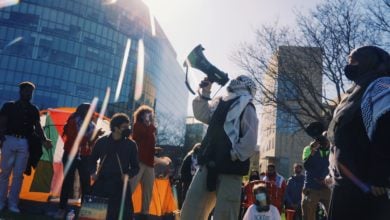
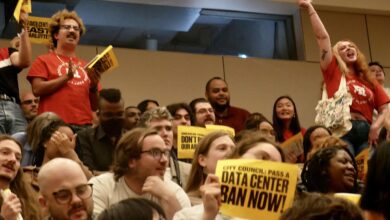
None of this should be read as a turn toward peace. In the days after the announcement Trump traveled to the G7 summit in Evian, where the leaders of the other imperialist powers did not question the war or its dead but congratulated him and signaled that, with Iran settled, he could turn his attention to the confrontation with Russia. The resolution of one war is treated as the clearing of the calendar for the next. Trump is in many respects an erratic and personal actor, indifferent to the doctrines of the foreign policy establishment, and it was in part his own recklessness that drove the war to the edge before he pulled back from it. But the drive toward war does not originate in his temperament. It is structural, rooted in the requirements of U.S. imperialism, and it persists regardless of which individual occupies the White House. The same establishment that did nothing to restrain him from this war will do nothing to restrain the system from the next. What forced this retreat was the pressure of a mass antiwar sentiment at home and abroad, together with an economic cost that Washington proved unwilling to keep paying, and that pressure remains the only force that has shown it can impose limits on the war machine.
The tasks and demands before us are: a complete and permanent end to the bombing of Lebanon and the withdrawal of Israeli forces, the full lifting of the sanctions that wage economic war on the Iranian people, and the return of Iran’s frozen assets without conditions. The movement that helped force this retreat is the one that must continue the fight to close any road back to war.
Featured image: Trump signs Memorandum of Understanding at Versailles, via X.com @EmmanuelMacron