The billionaires don’t value anyone who isn’t making money for them. This shows especially in their attitude towards Social Security and retired workers who receive Social Security benefits. The billionaires think: “If you aren’t working to enrich our profits, what’s the point? Why are we wasting good money on you?”
A recent spate of attacks in the mainstream media indicate serious attacks on Social Security may be on the horizon, trying to pit younger workers against older workers, all while every worker is being squeezed to the breaking point by compounding economic crisis. Before the Social Security Act of 1935, older workers had only their own meager savings (if any) and the support of families to live. Older workers had a poverty rate of 50%, with many living on “poor farms” with virtually no health care.
Social Security was won in struggle
Social Security, along with many other benefits for the working class, such as unemployment insurance and disability benefits, were enacted in 1935 during the administration of Franklin Roosevelt.
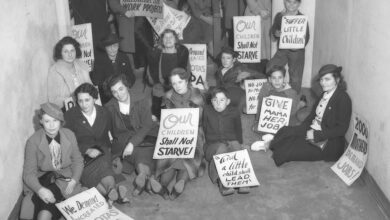
But these benefits were never a gift from the billionaires. FDR’s first administration in 1932, in the midst of the great depression and an unemployment rate of at least 25%, promised a “New Deal” for the working class. But in reality there were very limited provisions for job creation and unemployment relief. Roosevelt’s initial program was in fact quite conservative. His platform included calls for “drastic reductions in federal spending,” and a “balanced budget.”
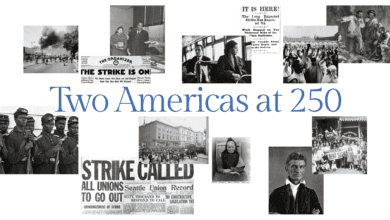
But working class struggles of the period, often organized by dedicated socialists, forced a “Second New Deal” starting in 1935. Sit-down strikes beginning in 1933 grew into a nation-wide tidal wave of union organizing. From 1935 to 1939 there were 583 sit down strikes of over 500,000 workers, followed by additional strikes by auto workers, butchers, bakers, sales clerks, millers, tire workers, cigar makers, miners, pilots, pecan shellers, retail workers, sailors, steel workers, fruit pickers, waterfront workers are just a sampling of the powerful strike movement of union organizing in the 1930s.
These and many other struggles forced FDR to respond. Among other important reforms, the Social Security Act of 1935 established a safety net for older workers, along with the beginning of unemployment insurance and disability benefits. An important thing to understand about Social Security is that it is not some kind of charitable hand-out for people who aren’t doing any work. Workers pay into Social Security with deductions from each paycheck, which is matched with taxes paid by the boss. So the payments made to retired workers are deferred compensation.
Capitalists have wanted to roll back the New Deal from day one
Ronald Reagan in 1982 proposed private accounts for Social Security recipients – which would generate immense fees for the banks. Older and retired workers so overwhelmingly opposed the plan that it was immediately shelved. Ever since, politicians have fraudulently sought ways to “save Social Security” by proposing indirect ways to cut or alter benefits.
Reagan signed the Social Security Amendments of 1983. These included gradually raising the full retirement age from 65 to 67; and making 50 percent of Social Security benefits taxable for recipients with overall incomes above $25,000 for an individual and $32,000 for a married couple filing jointly. This was all done under the guise of “protecting Social Security” He also helped the government transfer $2.7 trillion from the Social Security fund to the general fund over a 30-year period.
Donald Trump has assured older people that he would “defend Social Security,” but he has called Social Security “a scam, the whole thing is a scam,” and “a welfare program.” His double talk reflects his awareness of the deep suspicion that retired workers have of the continuous threats to Social Security. He says only that he will “cut massive waste and fraud,” a time worn cover for cutting social services.
Ageist dog whistles undermine Social Security
Recently there has been a new round of propaganda against Social Security, highlighted by the promotion of an upcoming publication, “Gerontocracy in America.” This book states “…older Americans, who had been one of the most underprivileged groups in the country, are now some of the most overprivileged.”
This book might be overlooked as just one more attack on older workers, except it was given prominent billing in the New York Times under the heading: Older Americans Are Hoarding America’s Potential.
But here are some actual facts: The LeadingAge LTSS Center at the University of Massachusetts, Boston explains in an index tracked by the center “… half of people over 65 cannot afford to meet their basic living expenses.” Research by the center and the National Council on Aging found that 80 percent of older households don’t have the financial resources to weather major financial shocks such as widowhood, serious illness, or the need for long-term care.
Furthermore, the poverty rate for the elderly would be significantly higher without Social Security. Around 33% of Americans depend on Social Security for over 90% of their income, including 52% of Latinos and 45% of African Americans. In addition, despite Social Security benefits, 15 percent of older adults lived in poverty in 2024, up from 10.7 percent in 2021 — the only age group that has seen an increase in poverty. These figures are even worse for Black and Latino workers.
Younger workers are very often told that when they retire, Social Security may not be there for them. Now, the CATO institute, a traditional attack dog for the elites, has “warned” in a recent article that “Young Workers Could Lose $110,000 in Lifetime Earnings to Keep Social Security Solvent” and that “Social Security reform is coming.” Newsweek ran an article several months ago entitled “How Retirees Are Living Off the Backs of the Young.”
They make out older people to be like vampires or zombies in a horror movie, instead of family members, neighbors and co-workers. The dehumanization of older people is pervasive in all areas of capitalist society, devaluing older workers and paving the way for attacks on Social Security.
The American Society on Aging explains:
“Ageism in American medicine and society is a matter of life and death, as dangerous as any incorrectly prescribed medicine or slipped scalpel. These negative stereotypes often result in less effective care, like denial of treatment options, underdiagnosis of depression, and mismanaged pain.”
“Ageism in the media remains pervasive. One study found that only 1.5% of characters on television in the United States were older people and most of them had minor roles and were often portrayed for comic effect, drawing on stereotypes of physical, cognitive and sexual ineffectiveness.”
Common sayings about older workers include: “You can’t teach an old dog new tricks,” “fossil,” “has-been,” “over the hill,” “past their prime” and so on. The devaluing of older workers undermines class solidarity and serves the continued threats to Social Security by the ruling elites
Is there a new round of attacks on Social Security coming? The decisive factor of active opposition by older people and the solidarity of all workers stands in the way.