On March 23, the Women’s National Basketball Players Association voted unanimously to ratify a historic collective bargaining agreement with the Women’s National Basketball Association. This landmark victory for women athletes demonstrates the power of collective bargaining and union organizing.
The WNBA has experienced exponential growth in profit over the past five years, with a 180% increase in the value of its teams from 2024 to 2025 alone. Despite this, WNBA players were stuck with a $60,000 minimum salary.
Amid stalled contract negotiations, 98% of WNBPA members voted to authorize a strike in December 2025, leading to the recent agreement reached between the players union and the league. The new collective bargaining agreement, known as a CBA, increases the minimum salary to $300,000 and includes a 20% profit sharing agreement with players. It’s worth noting, however, that NBA players have a 50% profit sharing agreement.
Six of the 13 WNBA teams are directly owned or operated by National Basketball Association team owners, with NBA influence controlling roughly 60% of the league. The NBA also manages the WNBA’s media rights and sponsorship deals.
New WNBA CBA is part of a historical trend
The efforts by WNBA players are a part of a legacy of professional athlete workplace organizing, from the struggle to form the NBAPA in the 1950s and 60s – establishing the oldest trade union of the four major professional sports leagues, the 1982 and 1987 NFL players’ strikes, the 232 day 1994-95 MLB strike that cancelled the World Series, the 2020 NBA Black Lives Matter wildcat strike, and of course the struggle for equal pay for the U.S. Women’s National Soccer Team.
The WNBPA was founded in 1998 to fight for raises, maternity benefits, health insurance, retirement plans and better working conditions. WNBA minimum salaries barely scratched $30,000 at the time.
It was the first trade union formed by women professional athletes and the first to ratify a CBA. The WNBPA inspired the formation of the National Women’s Soccer League Players Association in 2017.
Some WNBA players fight for their communities too
WNBA players have long used their platforms to speak out about police brutality, ICE terror and LGBTQ issues. In 2016, players from multiple teams were fined for wearing black warmup shirts in protest of racist police murders. Popular outrage over the fines led to their reversal.
More recently, WNBA All-Star Breanna Stewart held up a sign that read “Abolish ICE” during player introductions at Unrivaled in Miami on January 25. Several other WNBA players made public statements condemning ICE.
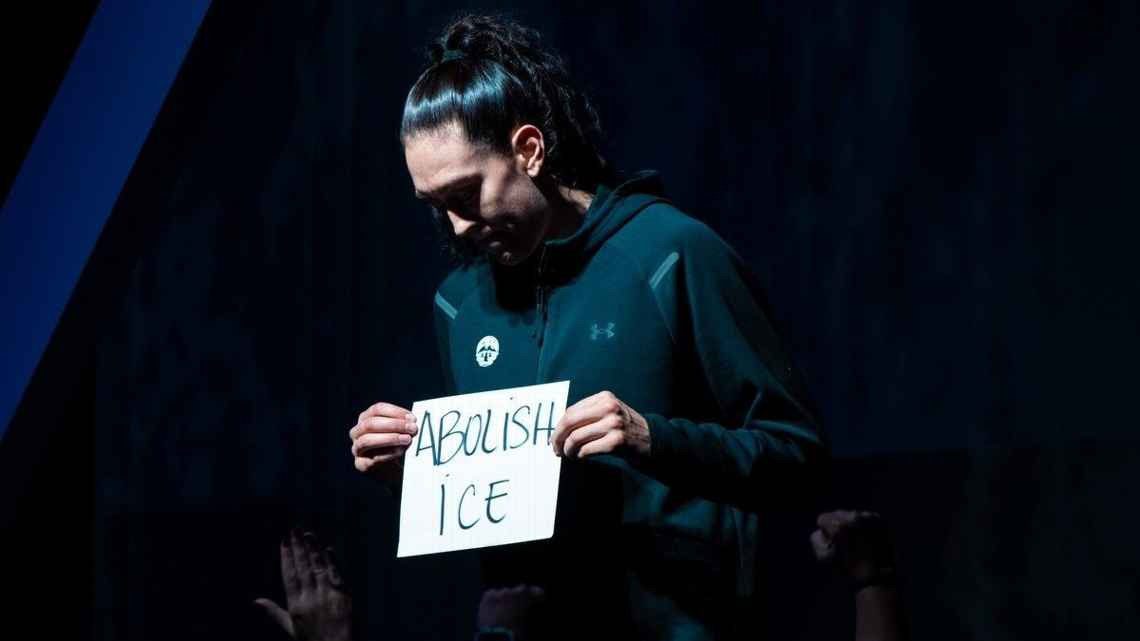
Photo source: Unrivaled
Some WNBA players have also spoken up for Palestine, most notably Natasha Cloud, who frequently dons a keffiyeh and even joined pro-Palestine protests in Washington, D.C. as early as November 2023.
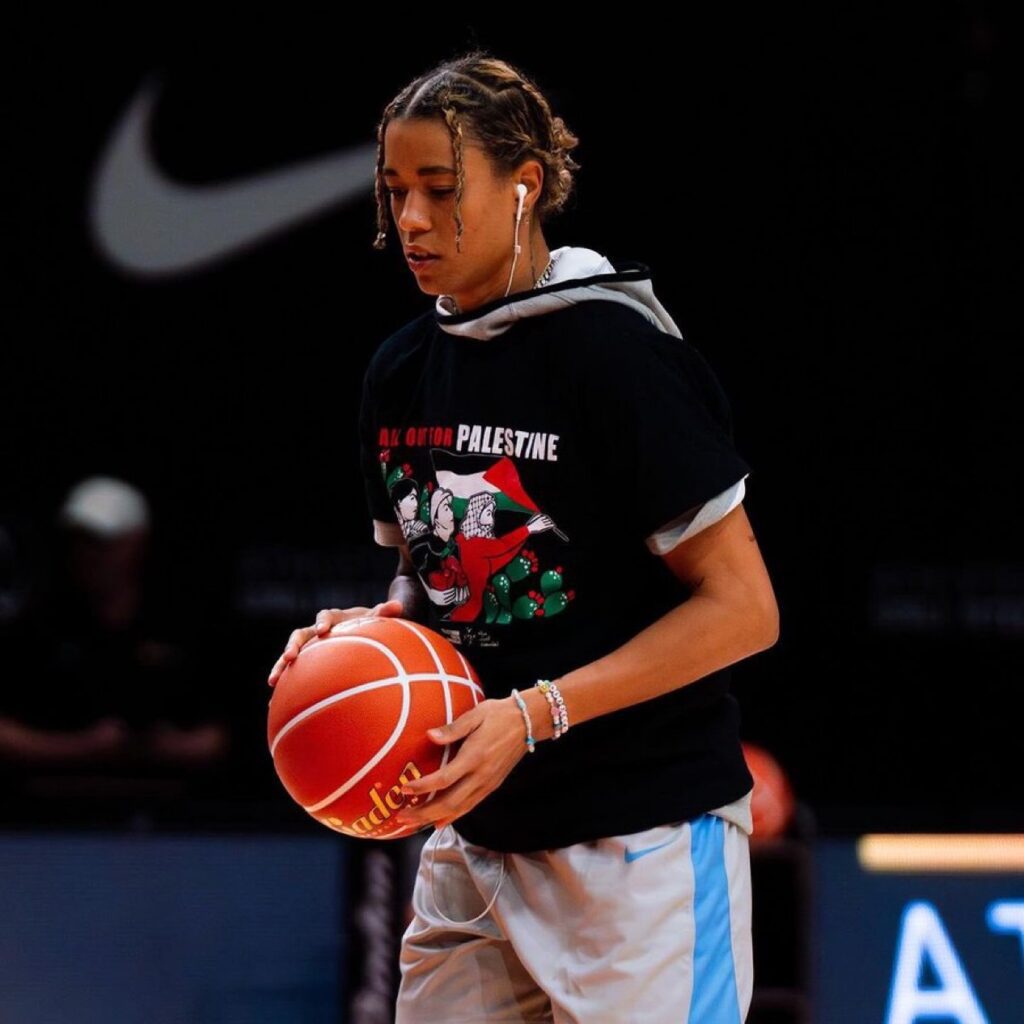
Photo source: @palyouthmvmt on X
How the WNBA CBA inspires other athletes
As news of the historic WNBPA spreads, other athletes are taking note of its significance.
Sade Minor, a professional gridiron football player for the Chicago Winds, told Liberation News that, “Unity is the biggest part of this whole collective bargaining agreement, because that lets us know that there is strength in numbers.”
Nicole Matheson, a Winds player and Women’s National Football Conference All-Pro, said, “That union is strong, and that’s what we need to see: more unions like that.”
What the WNBA CBA reveals about the nature of U.S. professional sports
In the U.S., professional sports are for the most part left to capitalist market forces. The major sports leagues rely on individuals or groups of investors to fund teams, who then beg local and state governments for taxpayer dollars to fund facilities for these for-profit professional sports teams.
While professionals in a handful of sports make millions of dollars per year, the median salary of athletes in 2024 was just $62,360. Even in leagues where players make millions, their individual salaries are minuscule compared to the superprofits raked in by team owners. The exploitation of athletes, coaches, other workers and taxpayers is built into the foundations of the country’s multi-billion dollar sports industries.
That’s why, despite generating billions in profits for WNBA owners, securing a living wage for the players had to be won through collective struggle. And for millions of people across the United States, the fight for a living wage is all too familiar.
Feature image: WNBA players wear “Pay Us What You Owe Us” during July 2025 All-Star Game.