Overdose is the leading cause of death for Americans ages 18-44; in 2024 more than 80,000 people in the U.S. died from overdose. Many people are aware of the role of the Sackler family and Purdue Pharma in profiting by promoting the opioid Oxycodone. Each person who has died due to drug-related causes represents a family’s grief as siblings, spouses, children and parents succumb to a health condition that can be treated.
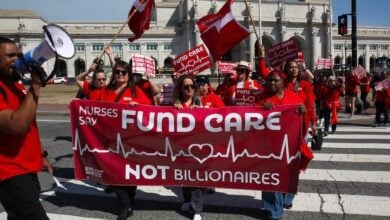
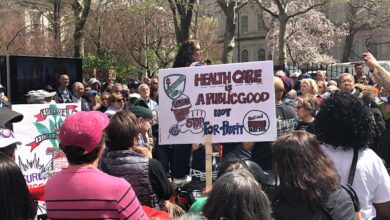
Why do tens of thousands of people suffer and die like this? Substance use disorder is a complex bio-psycho-social condition for which there is no one-size-fits-all solution. However, in the United States, we face a perfect storm that fuels the crisis: vast social inequality with countless people homeless or housing insecure, widespread food insecurity, large swathes of the population lacking health insurance or underinsured, a for-profit medical system (including a profit-driven addiction treatment industry) and ever growing social atomization leading to a loneliness epidemic, all push people to seek relief through drugs including alcohol. Opioid drugs are widely available through legal prescriptions that can be abused or purchased on the street. Users of illegal opioids are especially vulnerable to accidental overdose due to the unregulated quantities of active ingredients in the products they consume.
Many people concerned with this problem seek solutions, among them medications that could support people wanting to break free of drug dependence by easing withdrawal and reducing cravings.
A recent article in the New York Times Magazine outlines how a medication effective in curbing opioid cravings was kept away from patients by corporate greed plus government red tape grounded in a criminalizing approach to substance use disorder.
In short, the company that controlled the medication, Buprenorphine, was initially reluctant to market the medication for opioid addiction because it was an “old” medication, used as a painkiller, that researchers had noticed reduced opioid cravings.
If pharmaceutical companies were motivated by concern for public health, this would have been cause for celebration. Instead it led to consternation. Why?
From cheap generic to patented profit-maker
Buprenorphine was patented in 1965 and was first used for the treatment of severe pain. Later it was found to reduce cravings in people with opioid use disorder and was approved by the FDA in 2002 for that purpose. Because it had been patented so long ago, by 2002 it would have been relatively inexpensive and available as a generic. Therefore Reckett, the company that owned it, would have had no financial incentive to go through the process to bring it to market as a treatment for opioid addiction. What happened to bring Buprenorphine to market as Suboxone?
The NYT article deserves to be read in full, but in a nutshell, the company utilized three different federal processes to create the conditions to profit from Buprenorphine. First they partnered with the federal government’s National Institute on Drug Abuse. NIDA paid for the clinical research to show that the medication would be effective and safe in treating addiction.
Even though the feds were footing the bill for the research which typically could cost $100 million, the company also wanted to make sure the drug would be profitable once it hit the market. So at the same time, they sought a special status with the Food and Drug Administration called orphan-drug status, which would bar generic competition for the first seven years the drug was on the market.
This status is supposed to apply to medications for rare diseases, (although opioid use disorder is hardly uncommon) but Reckitt made the case that there would be few patients for the medication if it were approved since it would be illegal for doctors to prescribe it to treat addiction outside of highly regulated methadone clinics. But it doesn’t stop there.
Simultaneously, Reckitt was working to change the laws on medication assisted treatment for substance use disorder to make it easier for doctors to prescribe medications like Buprenorphine–which would increase the number of patients.
Without these conditions under which they would be guaranteed a profit the medication would likely never have seen the light of day.
Profit motive leads to corruption and abuse
The FDA was skeptical about claims that the medication would be unprofitable but eventually agreed to grant orphan-drug status. Changing the law to allow doctors to prescribe the medication from their offices faced opposition from the Drug Enforcement Administration, since Buprenorphine can be abused and potentially could be diverted to illegal uses, as well as from the methadone clinic industry, which saw office-prescribed Suboxone as a direct competitor.
As this process to change the law in the U.S. unfolded, the medication was being framed as a stand-alone “cure” for addiction, rather than just one tool in the toolkit of comprehensive treatment. In France, where by this time Suboxone was being used successfully, it was prescribed in the context of comprehensive treatment provided by a nationalized healthcare system. Of course, the United States is unique among economically developed countries in its popularly detested for-profit medical system.
The law wound its way through Congress, ultimately allowing doctors to prescribe the medication after a mandatory training workshop and with a limit on the number of patients that could be treated (initially this number was 30). The bill was signed into law in 2000 by then-President Bill Clinton and two years later Suboxone was approved by the FDA.
Because of the patient limits and training requirements, combined with the stigma directed towards people with substance use disorder, making sales for Reckettt was an uphill battle. Doctors weren’t interested in treating drug addicts, especially if it required a lot of extra effort on their part.
With a massive sales force targeting doctors, and a 2006 change in the law raising the patient limit to 100, sales of Suboxone began growing. When the seven-year orphan-drug status protection from generic competition was approaching, Reckitt developed a different format for Suboxone, a film strip that dissolved in the mouth, claiming it would be “safer” than tablets. The plan was to remove the tablet version from the market as “unsafe” with the new film taking its place, holding up the transition to all-generic availability.
Not only was this a self-serving tactic, the new film was, in fact, NOT safer. If accidentally ingested, a film is harder to spit out than a tablet. The FDA was skeptical of the company’s claims but Reckitt went ahead with marketing the film, and submitted a study that purported to show that the film was safer. Some very high-pressure tactics ensued and the film was approved; generic status was staved off as the tablets were removed from the market. In 2013, Reckitt made $1.5 billion in Suboxone sales.
At the same time the company was coming under federal scrutiny for its misleading machinations around the introduction of the film along with involvement in the creation of standalone, cash-only Suboxone clinics from which the medication could be diverted for illegal uses.
U.S. history of racist drug policies and stigma
From the disproportionate arrests of Black people for cannabis use to crack laws which sentence Black users more harshly than those using powder cocaine, drug laws have been used to especially target communities of color. At the same time, the government has been involved in introducing some of these very same drugs into the communities that were then criminalized. The CIA has been credibly identified for its involvement in cocaine and heroin trafficking.
The general attitude towards substance use disorders in the United States has been shaped by a moralistic and criminalizing approach, painting people with SUD as “bad” people and criminals. Without denying that some people with SUD engage in drug related anti-social behavior that hurts other people, the “lock them up and throw away the key” approach has been shown to do nothing to stop the addiction and overdose epidemics. This is because racist criminalization and prohibition of substances have been proven completely ineffective in addressing what is a serious public health problem.
The most recent statistics on overdose deaths, with more than 80,000 Americans killed by drug-related causes in 2024, actually represents a drop of 30,000 from the prior year, taking the total back to the level before the COVID-19 pandemic, when isolation and the closure of treatment facilities fueled a spike in overdoses. Of course, 80,000 is still unacceptable. SUD experts attribute the drop to policies and programs that are working, like the widespread adoption of overdose reversing medicine Narcan, which is now carried by first responders and community members and can be purchased over the counter. Another factor that may be contributing to this progress is increased access to treatment, including medication assisted treatment using Suboxone and Methadone. However, experts in the field fear progress will stall or be reversed by the Trump administration’s cuts to health and science.
What’s the solution?
The truth is, U.S. drug policy is not really about public health. It’s about controlling poor and working people. Drugs act to numb the pain of being a working-class person under capitalism with all the trauma inherent in this society. People in the throes of addiction are preoccupied with getting their next fix instead of organizing and fighting back. At the same time, drug laws, which are disproportionately enforced against people of color, are a mechanism of the pipeline to prison which siphons off surplus labor, the “army of the unemployed,” who are seen as a huge threat to the ruling class — especially those from the Black community. Likewise, the U.S. government’s healthcare and medication policies prioritize private profit over public health. For years, Purdue Pharma got away with promoting a dangerous opioid drug, enriching the Sackler family, while countless families suffered.
It could be very different in a socialist society where the working class has political and economic power to create a government that puts the needs of people over profit. A socialist government in the U.S. would deploy doctors, nurses, social workers and peer counselors into communities to connect people with SUD with comprehensive, universal healthcare, using all the tools in the treatment tool kit from harm reduction to evidence-based in-patient treatment and everything in between. Profit hungry drug companies would be taken over by the new government and life-saving medications would be provided at no cost to patients. Similarly, no business would be allowed to make a profit from providing SUD treatment. People struggling with addiction would be treated with compassion, their inherent value as human beings respected, finding meaning in life through connection and solidarity.