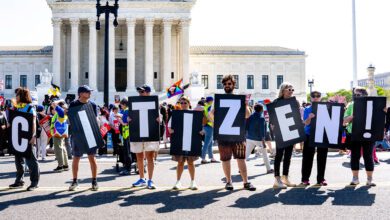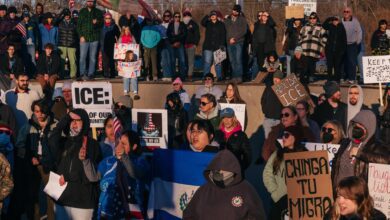
The United States Supreme Court has granted “emergency relief” to the Trump administration, bolstering the executive branch’s ability to violate due process rights for potentially millions of migrants and deport them to third countries (countries other than those that are specifically listed in their deportation orders), without a hearing before a judge.
Using the shadow docket to avoid public scrutiny, the unsigned order — without any explanation or justification — overturns a lower court ruling that had banned the Department of Homeland Security from deporting immigrants to “third countries” without notice and without allowing them to object to their removal to that country on the basis that they have a credible fear they could face torture and persecution if deported there.
The ruling stems from a class action lawsuit brought by four plaintiffs on behalf of all migrants with final deportation orders who could possibly be removed to a third country. The plaintiffs asked Federal Judge Brian Murphy to order a preliminary injunction that would prevent the Trump administration and the Department of Homeland Security from carrying out third country removals while the case worked its way through the legal system. The lawsuit argued migrants have a constitutional right to due process, and a right to be notified in advance of the country they could be deported to, so they be given time to object to the removal to a country other than their own and had not been listed in their original deportation proceedings.
Lawyers for the Trump administration argued this would cause them irreparable harm, claiming after a final order was issued DHS wasn’t obligated to open any additional legal proceedings or provide notice to immigrants about their removal, even if the individual had no previous ties to the third country or if the person could credibly fear for their life if deported to that country.
Murphy ordered DHS to stop “third country” deportations, unless they had given notice to the individual and their attorneys of the third country they would be removed to, provided meaningful opportunities for them to object to their removal to that country, and the legal proceedings for their removal to the third country was completed. DHS attorneys immediately appealed the decision to the First Circuit Court who upheld the injunction saying the Trump administration had failed to meet the necessary standards for the relief they sought.
In the weeks following Murphy’s preliminary injunction, reports that migrants from Laos, Vietnam, and the Philippines were set to be deported to Libya surfaced, forcing Murphy to issue another ruling clarifying that if the reports were true and the deportations were to occur, the Trump administration would “clearly violate” his order.
In May DHS officials flagrantly violated Murphy’s rulings when they tried to swiftly fly eight men to South Sudan one day after notifying them of their removal. This maneuver by the Trump administration required Murphy to issue emergency orders for the men to remain in U.S. custody, forcing the flight to divert to a U.S. naval base in Djibouti. At the hearing the judge demanded the government explain why it had “unquestionably” violated his order, Murphy ruled the Trump administration was in violation of the injunction, and would not rule out holding the administration in contempt of the court.
This victory illuminates a sharp contradiction, while the lawlessness of the Trump administration is rewarded by the Supreme Court by granting them the ability to deny people their due process rights, migrants who have fled violence and wars caused by the United States in their home countries are criminalized, targeted, and stripped of their constitutional rights.
The Supreme Court has a long history of weaponizing the law to deny oppressed people equal rights. In the 1857 Dred v. Sanford case the court ruled that enslaved people were not citizens of the United States and therefore they couldn’t expect any protection from the federal government or the courts. In the 1944 Korematsu v. United States case that challenged the government’s ability to force Japanese Americans into internment camps, the justices ruled the displacement didn’t display racial prejudice but responded to legitimate national security concerns.
These institutions long said to be the defender of people’s rights are quickly losing their legitimacy, more and more Americans are starting to see that they exist to defend and protect the power of the rich at the expense of our rights and dignity. As the racist attacks on immigrants intensify, only organized resistance and solidarity can protect immigrants and the whole working class from Trump’s far-right billionaire agenda.
Feature image: “ICE Out of New York” rally in New York City, June 2025. Credit: Wyatt Souers