Photo: Madagascar’s capital, Antananarivo. Credit — Sascha Grabow
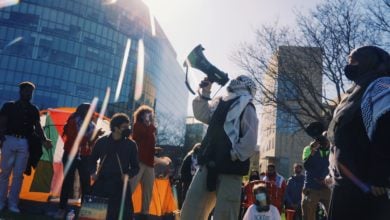
On Oct. 17, a military coup ousted the former president of Madagascar, Andry Rajoelina from his seat of power. This action was spearheaded by Col. Michael Radrianirina, who was then sworn in as the interim head of state following weeks of uprisings led by Madagascar’s “Gen Z” movement: Gen Z Mada. These protests began in late September after experiencing frequent water and power outages across the country. By Oct. 20, Radrianirina named banker Herintsalama Rajaonarivelo as his prime minister.
Thousands of Malagasy people initially took to the streets over the irregularity in the water and electrical supply; it has now triggered an even deeper conversation about class and political inequality in the region as a whole. Protesters have since brought up issues surrounding poverty and the cost of living, access to education, and corruption within the government. Not only are the young people of Madagascar demanding access to the basic necessities required for survival, they are also raising demands around improved living conditions for Madagascar’s working class as a whole.
Protesters widely express frustrations with the limited opportunities for financial and social advancement due to failing systems within the governmental structure.
Malagasy peoples’ struggle against colonialism
This is far from the first time that Malagasy people rose up. Following World War II, the Malagasy people organized a series of uprisings known as the 1947 Malagasy Revolt after tensions reached a boiling point between French settlers and the indigenous Malagasy population. Provoked by a starkly obvious contrast in treatment and later solidified by broken promises of greater autonomy made to the indigenous Malagsy population during the war, movements such as the Movement for the Restoration of Malagasy Independence (MDRM) coordinated a number of surprise attacks like setting fire to French owned plantations and targeting French garrisons.
Although the French’s response to these uprisings was cruel and severe, including mass executions, imprisonment and torture, the Malagasy people contined to fight for their freedom. Despite relentless efforts to stamp out any rebellion, the 1947 revolt is a pivotal marker of Madagascar’s journey towards independence. It played a huge role in establishing national consciousness as a collective. Moreover, aided in the continuation of resistance in the country after the movement was officially put to an end in 1948 with the disbanding of the MDRM. Those massive strides towards sovereignty eventually lead to Madagascar’s full independence in 1960.
Madagascar today
Today, Madagascar is among the ten poorest countries in the world with 79.5% of its population living below the poverty line, while the country is one of the richest nations in critical minerals. Like many other countries throughout Africa, it is largely exploited by transnational corporations, aided by corruption within comprador governments which has now reached alarming levels. The Malagasy people have every legitimate right to mobilize against this exploitation of their country and, with the youth leading the charge, work to forge a popular movement in order to push back against the violent effects of neocolonialism.
The Global South is swelling with young people which make up a good portion of the working class. In Africa, the median age is 19 – lower than any other continent. The expressed frustration with unemployment among young people in the region is due to a variety of reasons, from limited state capacity to address issues finding suitable work, to climate catastrophes where imperialist corporations have extracted critical resources, often resulting in mass displacement. They also often find themselves victim to ongoing wars and corrupt politics as the result of brutal neocolonist endeavors.
In Morocco, young people have been leading similar demonstrations in response to lack of opportunity and state corruption, noting how their government has money to spend on sports stadiums while their healthcare system falls to the wayside, with the majority of their population being under the age of 35. In Cameroon, thousands of youth are contesting the election results of 92 year old Paul Biya, who will begin his 8th term as the country’s president. This has culminated in mass uprisings that are being met with deadly repression. The opposition candidate, Issa Tchiroma Bakary has encouraged supporters to protest against the French-backed leader. These mass movements in Madagascar, Morocco, Cameroon and numerous others that are quickly catching steam throughout the Global South, are indicative of a much larger question.
Though many of these movements are often set into motion by one particular concern, such as disruption to the water and power supply, they have resulted in it being the catalytic force needed to drive larger societal and political change, fostered by clear and potent demands. The Malagasy people deserve economic stability free of government corruption, exploitation of their land for minerals and resources and to escape the endless injustice of imperialism.