“Drill, baby, drill” is one step closer to reality. On December 18, the U.S. House of Representatives passed the SPEED act (Standardizing Permitting and Expediting Economic Development Act, not to be confused with the other SPEED act) by a count of 221-196, it now heads to the Senate for further passage.
Authored by Arkansas Rep. Bruce Westerman, the SPEED act would amend the National Environmental Policy Act by removing mandatory environmental impact reviews for large energy or infrastructure projects on federal lands or permitted by the federal government, a key step to the Trump administration’s energy plan outlined in “Unleashing American Energy.”
What does this mean? It would be as if environmental impact reviews were taken out of the pass/fail final grade and instead deemed extra credit. Last minute changes made to the bill by Andy Harris (R-Md.) and Jeff Van Drew (R-N.J.) went even further in favor of the fossil fuel industry by “[excluding] any project from the bill’s reforms that the Trump administration had flagged for reconsideration—something the administration has done repeatedly for renewable projects like offshore wind.” (SPEED Act Passes in House Despite Changes That Threaten Clean Power Projects – Inside Climate News)
David Watkins, director of government affairs for the Climate and Energy Program at the Union of Concerned Scientists, outlines the negative impact this would have on our communities and our prospects for a transition to renewable energy.(Permitting “Reform” Package is a Holiday Gift to Big Oil and Gas, Lump of Coal for the Public)
“This bill is a sizeable holiday gift basket for Big Oil and Gas. It includes goodies like shielding fossil fuel projects from meaningful review or public input before they are permitted, then shielding them from legal recourse after they are approved… The bill even allows federal agencies to ignore scientific or technical information related to permit applications. Circumventing science and denying reality will only lead to greater harm to our environment and worse outcomes for communities.
“So, while the Trump administration throttles renewable energy projects with one hand, the House has just passed a bill to further advantage the only energy option Big Oil and Gas wants you to have.”
Nationall Environmental Protection Act of 1970: victory for the movement
NEPA was first passed into law in 1970 by the Nixon administration followed by the establishment of the EPA later that year — a major victory for the environmental justice movement. It outlines the federal permitting process for the review and disclosure of environmental impacts of major projects, like a power plant or a highway, before approval. Disclosing these oftentimes long-term environmental impacts has empowered communities to raise environmental justice concerns and determine for themselves whether or not a project benefits the community.
But NEPA has had opponents since its inception, and the SPEED act is the latest of the many attacks on NEPA that began with the Reagan administration’s cuts to the EPA. The NEPA process requires both staffing and budget to review the environmental impact statements for projects, and cutting both creates a growing backlog as well as manufactured frustration with the inefficiency of the permitting system. Cutting the staff and budget of regulatory agencies and then blaming those agencies for being inefficient is an ongoing tactic of industry and their supporters to discredit and undermine environmental projection efforts. The Trump administration’s latest round of drastic cuts to the EPA earlier in 2025 laid the groundwork for the SPEED act.
Though it has not yet passed, what can we expect from American energy production if the SPEED act passes into law? What is the importance of energy for the U.S. Empire and the billionaires’ agenda?
The Permian Basin and the “Shale Revolution”
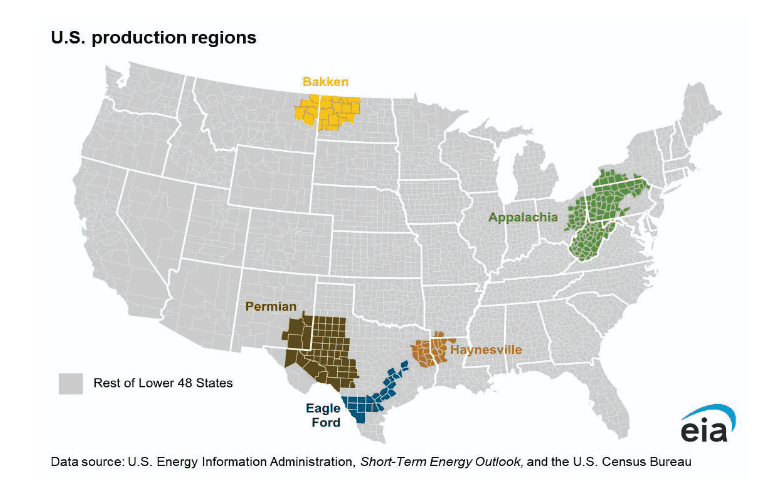
The Permian Basin is an oil-and-gas-producing area located in West Texas and the adjoining area of southeastern New Mexico. It contributes over 6 million barrels of oil a day to U.S. oil production, which is just less than half of the U.S.’s total crude oil production of over 13 million barrels a day. The Permian Basin contains Tight Oil or Light Shale Oil, only attainable through the environmentally destructive practice of drilling and fracking, and is the “chief growth driver for U.S. shale oil production.” Working-class communities around these drill sites are considered sacrifice zones for the profits of industry and bear the brunt of the air water, and soil contamination and ecological destruction that results from extraction.
The Financial Times report “The End of the Shale Revolution” describes the importance of the Permian Basin to U.S. imperialism:
“Rapid shale growth delivered a huge stimulus to the global economy by keeping fuel prices low, and freed Washington’s hands to take on oil-rich rivals in Iran and Venezuela without fear of economic blowback for voters at home.
“Soaring shale oil output helped soothe volatile crude markets — even as the Arab Spring brought turmoil to Middle Eastern producers and fresh conflict erupted in northern Iraq and the Arabian peninsula, including attacks on Saudi oil infrastructure.”
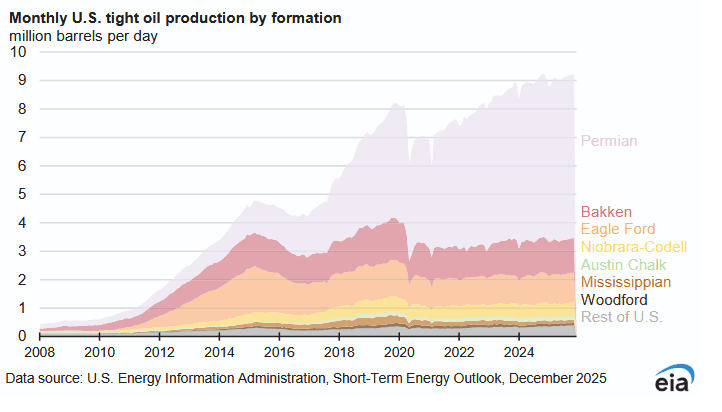
A large and expanding shale oil industry has stabilized the U.S. empire through the global upheaval of the 2010s through the present, with the Permian Basin playing a huge role as the majority producer of shale oil.
Texas Independent Producers & Royalty Owners Association President Ed Longanecker explains the necessity of the SPEED act for the Billionaire’s agenda.(SPEED Act to ease the way for energy projects – Odessa American)
“Comprehensive permitting reform is a strategic imperative for our country and industry. Without it America’s energy sector, particularly oil and natural gas, cannot operate at the pace or scale needed to meet domestic needs, support allies abroad or ensure long-term affordability for consumers.”
Domestic oil production has allowed U.S. energy to be less dependent on other countries’ sources of energy and provide its own stable energy source for itself and its allies when foreign sources have been disrupted. Additionally, the US Military’s ability to mobilize and strike across the globe is powered primarily by fossil fuels—“Drill, baby, drill” isn’t just short-sighted greed, it’s one of the main ways the U.S. Empire continues to dominate the rest of the world.
But oil and gas production growth in the Permian Basin, like all of the other shale regions, is beginning to slow and the rate of oil and gas that is produced will likely reach its maximum within the next 1-2 years. The earth has its limits an dthe Energy Return On Investment (the amount of energy resources gained vs energy spent to produce said resources), especially for shale oil production, is declining. True energy security could easily be achieved by shifting to wind and solar energy production, which is the lowest cost and fastest to deploy.
Even if the U.S. today is still producing a high amount of oil and gas, declining shale oil production will restrict U.S. capitalism’s ability to grow. Take the military industrial complex and AI. To expand either military buildup or AI requires an expanding source of energy.
We can expect passage of the SPEED act to affect the Permian Basin in 2 ways:
- At the cost of immense environmental devastation, the number of rigs operating in the region will increase;
- As ”sweet spot” (easy to drill) reserves deplete, the need for cost-and-land-efficient rigs will likely lead to the consolidation of oil producers in the Permian Basin. Only large enterprises will have the ability to take on the complex task of extracting shale oil and gas.
The SPEED act will facilitate the overproduction of oil and gas as well as the monopolization of the fossil fuel industry in the region: the same capitalist story.
Promoting fossil fuels: Key platform in billionaire agenda
Championing the fossil fuel industry is a key platform in the billionaire agenda. The fossil fuel industry’s existence and its key role in capitalist growth underpins the existential capitalist crises of war, climate change and automation and AI. The SPEED act will exacerbate these crises:
- U.S. Imperialism has begun to lose global energy dominance and will lose it when production in the Permian Basin stagnates. Even if the SPEED act maintains oil production growth, stagnation is a matter of when rather than if, as oil of all sorts is a non-renewable resource. The illegal war against Venezuela, and the continued aggression against Iran reveals the U.S. Empire’s attempt to maintain global hegemony over fossil fuels that U.S. production alone will be unable to influence.
- The climate crisis continues to destroy and immiserate our communities, a recent example being the flooding from the atmospheric river storms in Washington and Oregon. Global warming transforms these natural weather patterns into natural disasters—catastrophes that future generations will have to confront with minimal resources as long as our energy sector is dependent on fossil fuels.
- Automation and artificial intelligence are seen by the billionaires as a way to drastically reduce labor costs and strategically weaken the working class. To expand AI requires an expanding energy supply. Google’s recent acquisition of Intersect is indicative of its need for its own energy infrastructure for its present and future data centers. The SPEED act would also expand the capability of AI.
However, communities across America are already intervening in these crises and struggles are unfolding:
- Data center expansion is being thwarted as communities are aware of the pollution and overconsumption of water and energy that comes part and parcel with these data centers.
- The majority of Americans oppose military action on Venezuela and are beginning to understand it as a war for the oil industry rather than the interests of working people.
- The climate crisis is producing more and more climate refugees, and these communities are asking why our government isn’t doing more to prevent and prepare for these catastrophes and demanding the resources to rebuild their lives. The need for a comprehensive transition to renewable energy sources and green infrastructure is more apparent than ever.
As we struggle and intervene in these issues in our communities, progressive and revolutionary people should point to the root cause of these crises: capitalism. These crises can only be resolved under the banner of socialism: a system where working people have control over the development of their communities, and where the resources and rhetoric for war are instead used for promoting solidarity and meeting the needs of humanity and the planet.
Feature image: U.S. Rep. Bruce Westerman, author of the SPEED Act. Credit: Gage Skidmore, CC-BY-SA 2.0