As of May 1, 2026, the Purdue Pharma settlement took effect, dissolving the company to create a new public-interest entity, Knoa Pharma, which is supposed to combat the opioid crisis. This followed the final criminal sentencing. The current CEO had admitted the company gave kickbacks to doctors and deceived government drug regulators regarding the safety of Oxycontin.
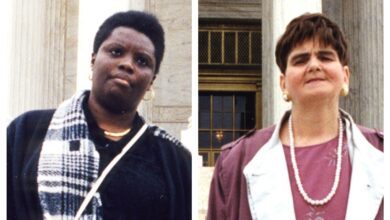
According to the Associated Press, the judge appeared to be on the verge of tears April 28 as she listened to five hours of testimony from families who lost loved ones to the opioid epidemic, as well as those who have struggled with opioid use disorder after being prescribed Oxycontin. This was the first time victims and family members were heard in a courtroom regarding the impact of Purdue’s criminal actions.
Purdue penalties show emptiness of capitalist “justice”
The April 28 sentencing represents the biggest settlement in the saga of Purdue Pharma and the Sackler family which owned it, for their role in promoting as “safe” the immensely profitable drug Oxycontin. From 1995-2017 Purdue took in $35 billion in total cumulative revenue from Oxycontin sales. The negotiated settlement shields the Sackler family from personal liability for causing thousands of deaths and countless suffering. While the Sacklers are paying $7.4 billion of their “own” money into the settlement, this money comes from the $10 billion in Purdue profits that they moved into their personal trusts.
Other key Purdue settlement numbers
- 0: Sackler family criminal accountability for the actions of Purdue.Under the settlement they are shielded from future civil litigation, though victims who opt-out of the payment fund may pursue individual lawsuits.
- $8,000-$16,000: The value established by the settlement for a human life lost or ruined due to Purdue’s malfeasance
- 55%: Percentage of victims who filed claims by a 2021 deadline who may be excluded due to strict documentation requirements
- $5.42 billion: settlement funds to state and local governments
- $225 million: settlement funds to federal government
- $394.91 million: settlement funds to insurance companies
- 15 years: How long it will take for the $7.4 billion settlement to be paid
These facts raise a lot of questions. Why are the parasitic insurance companies getting a nearly $400 million payout while the lives of those killed by Purdue are deemed worth no more than $16,000 a piece? Why will it take so long for the Sacklers to pay off the entire $7.4 billion, when the crisis they created has been going on for more than 30 years?
Probably the most important question is: Why are the Sacklers and top executives of Purdue not being held personally accountable, criminally or civilly? After all, countless people in communities all over the U.S. have been sent to prison for many years after being found guilty of selling drugs that are chemically identical to OxyContin.
What makes the Sacklers different from ordinary drug dealers?
The short answer is: They are filthy rich capitalists and the “justice” system we live under serves to protect the interests of the rich. Technically, one differentiator lies in the bankruptcy process. In 2019, facing a slew of lawsuits with total damage claims adding up to trillions of dollars, Purdue filed for bankruptcy. In a typical bankruptcy, the company files because it owes more than it has: liabilities exceed assets.
The court process then divides up the assets remaining to pay off the debts of the company. If a company has not paid wages to workers, they are considered creditors in the bankruptcy. However, bankruptcy laws prioritize the order in which creditors will be paid off. First in line to be paid are what are called “secured creditors” like banks. In many cases, by the time these creditors are paid, there isn’t anything left to pay the workers. This is a powerful example of how the legal system in our society upholds and protects capitalists over working people.
In the case of Purdue’s bankruptcy, the company continued to be profitable selling its drugs. That wasn’t why the company was facing bankruptcy. By the early 2000s, the truth about Purdue’s aggressive marketing and false claims about OxyContin began to come out. The entire U.S. was seeing an increase in opioid overdoses as well as an increase in heroin use. People from all over the country were personally impacted by tragic overdose deaths and anger was mounting. People began filing lawsuits.
“Anticipating that they might be liable in these lawsuits, both civilly and criminally, the Sackler family decided to reallocate revenue from Purdue Pharma to their own trusts and holding companies. This reduced the financial standing of Purdue Pharma to fend off the lawsuits. Eventually, by 2019, all Sackler family members that were on the board of directors of Purdue Pharma had resigned.” (Harrington v. Purdue Pharma, Wikipedia)
Thus, the Sacklers played a sort of shell game, moving the money into their personal coffers instead of the company’s, and stepping down from the board. (Could it be that they were trying to evade responsibility while keeping the profits?)
Interestingly, in 2024, the majority on the Supreme Court said that because of these actions, the Sacklers were “non-debtors” and thus not entitled to the kinds of protections usually granted to debtors in bankruptcy proceedings. However, this didn’t lead to the Sacklers actually being held accountable. The settlement negotiations, intertwined with bankruptcy proceedings, continued until the final sentencing which concluded on April 28.
The Sacklers agreed to pay the $7.4 billion out of their “personal” funds, over the course of 15 years, while not admitting any fault and being shielded from future civil lawsuits. The only exception to this would be suits filed by victims who had declined the payout determined in the settlement.
Federal investigation: Kid gloves & cover up
The Department of Justice started investigating Purdue more than 20 years ago in 2002, which ultimately led to a guilty plea by three Purdue executives in 2007. Purdue admitted to falsely claiming OxyContin was less addictive than other opioids, and to marketing the drug to doctors who were known to overprescribe opioids. The three execs paid fines totalling $600 million but claimed to not have known about these problems, or that actually, they had worked to solve the problem. This was the first Purdue settlement.
Years later, in 2019, the New York Times reported on a secret 2006 DOJ memo: “Sackler family members who own Purdue were sent reports about problems with the company’s drugs. But that evidence never came to light because the recommended felony charges against Purdue executives never went forward.”
The memo also indicated that Dr. Richard Sackler was aware of concern about the abuse potential of the drug as early as 1997. The 2006 memo was suppressed at the time and the DOJ allowed the Purdue executives to enter into the 2007 plea deal in which they paid fines but did not admit to any wrongdoing, similar to how the Sacklers are being treated today.
Purdue filed for bankruptcy in 2019. A little more than a year later in 2020 Purdue reached a settlement potentially worth $8.3 billion, admitting that it “knowingly and intentionally conspired and agreed with others to aid and abet” doctors dispensing medication “without a legitimate medical purpose.” The corporation pleaded guilty to felony charges but no actual people like Purdue executives, employees or members of the Sackler family were charged with any crimes as a part of this deal with the federal government in 2020.
The idea that the Sacklers would avoid accountability made many people furious. In March 2021, some members of Congress introduced a bill that would stop the bankruptcy judge in the case from granting members of the Sackler family legal immunity during the bankruptcy proceedings. The bill lapsed at the end of the 117th Congress in January 2023.
DOJ, FBI hypocritically condemn Purdue for putting ‘profits over patient health’
“Purdue Pharma put profits over patient health and safety,” said Acting Attorney General Todd Blanche.“ Kash Patel, head of the FBI, sanctimoniously chimed in, “The opioid epidemic in the United States is a plague that has ruined lives and destroyed families,” adding, “Purdue Pharma complicitly contributed to this national epidemic in the name of their own greed by blatantly ignoring the health and safety of patients putting countless lives at risk.” (DOJ press release, April 28.)
Despite the DOJ’s failure to actually hold any person accountable for hundreds of thousands of overdose deaths due to Purdue’s insatiable quest for profits, you’d think that these two Trump administration officials were practically socialists with all this talk about profits and greed!
It’s hard to take such statements seriously when Patel and Blanche are part of an administration that is stripping healthcare access from countless poor people, terrorizing immigrant communities, eviscerating civil rights, engaging in illegal, genocidal wars and much more.
A comedian is said to have quipped, “I’ll believe corporations are people when the state of Texas executes one” after the 2010 SCOTUS decision in Citizens United v. FEC, in which the court upheld the First Amendment speech rights of corporations to make large donations to political action committees.
Similarly, in 2014, the court in Burwell v. Hobby Lobby upheld the First Amendment right of religious freedom for corporations to refuse to subsidize access to birth control services as part of legally mandated health insurance for their workers under the Affordable Care Act.
The right of the corporation to freely spend money as it wants is protected by capitalist justice, even when the purpose of this spending is profoundly anti-democratic, harmful or even lethal to human beings.
Meanwhile, a capitalist corporation is being ”put to death” (dissolved) for its crimes, but the people who actually committed the crimes are shielded from any real consequences beyond parting with a fraction of their wealth which was stolen in the first place from the workers who actually created it.
A socialist approach to the opioid epidemic
In a socialist United States, healthcare would be a constitutional right. The problem of substance use disorder would be handled as a medical issue; people experiencing SUD would be able to access the spectrum of evidence-based treatment options at no cost. The pharmaceutical companies that manufacture drugs as commodities, to make a profit, would be taken over by the socialist government and operated in the interest of the people.
Life-saving medications would be available to everyone as part of comprehensive, universal health care. There would be no incentive to lie about side effects or potential dangers of any medication because the profit motive would be divorced from medicine. Medical professionals and their patients would consider the benefits and dangers of any course of treatment; doctors and nurses would have small enough caseloads to be able to closely monitor patients taking medication with potential for abuse.
Featured image: Aneri Pattani/KFF Health News