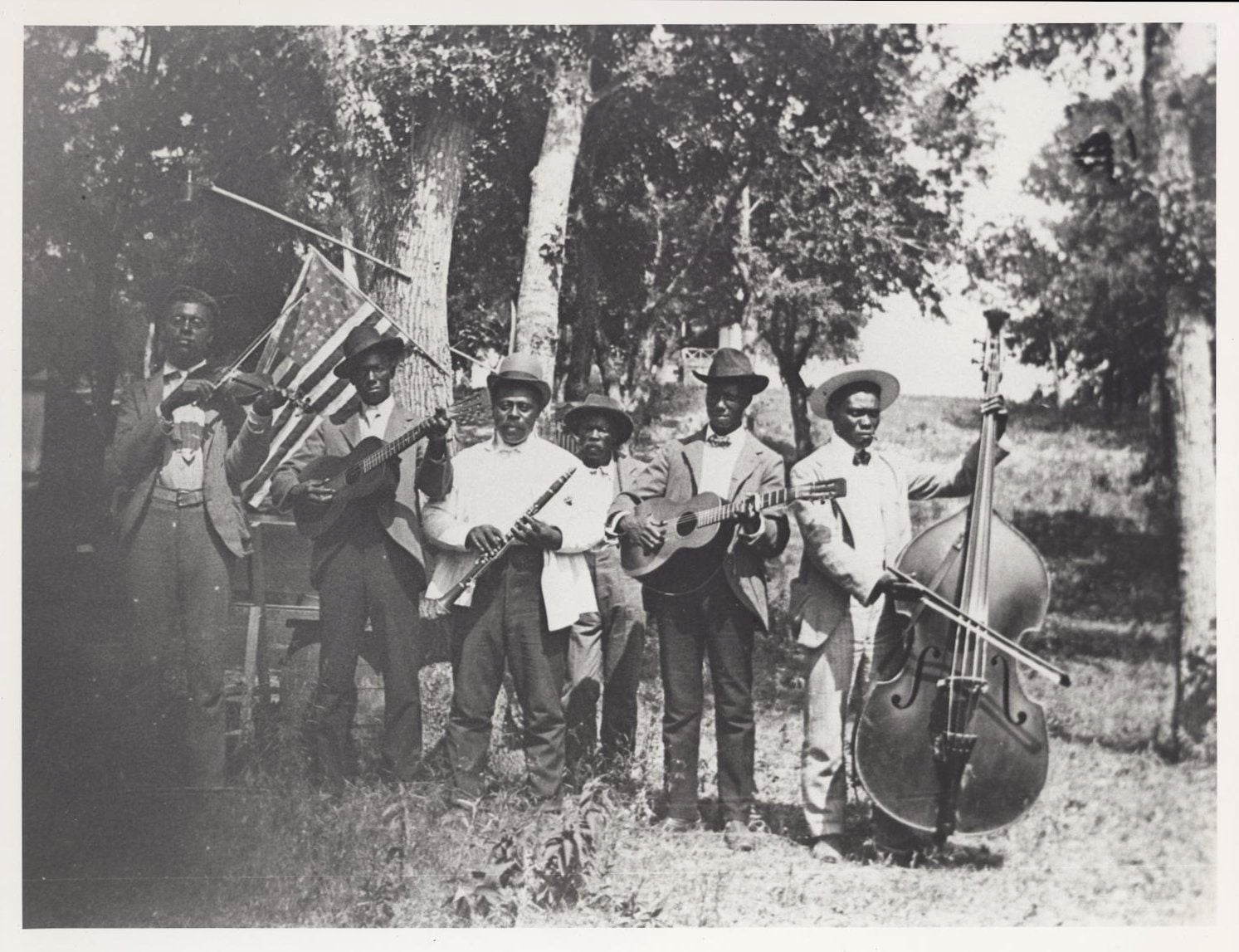
Featured image: Group of men in Civil War uniforms, likely for a re-enactment of the Union’s entry into Galveston. Photograph by Grace Murray Stephenson of Juneteenth celebrations in Eastwoods Park, Austin, 1900. — Source
Textbooks teach that Abraham Lincoln’s Emancipation Proclamation “freed the slaves” in 1863. But a decree alone freed no one. What ended slavery in the South was a powerful movement. During the Civil War, enslaved people waged what W.E.B. DuBois called a general strikes; paralyzing the Confederate economy by abandoning plantations en masse. Hundreds of thousands of Black soldiers joined the Union Army to fight for the freedom of all Black people.
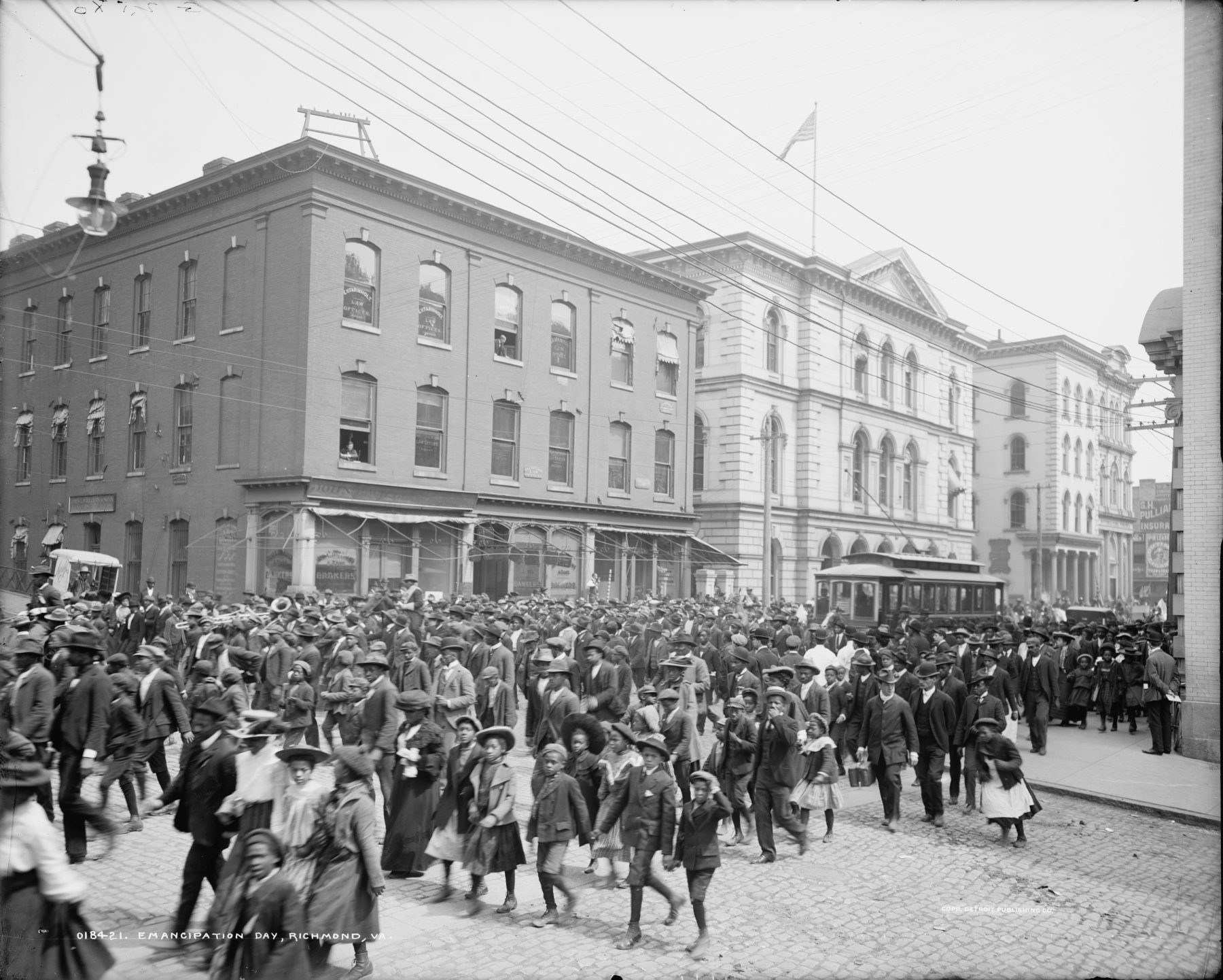
On June 19, 1865, the Union army reached Galveston, Texas and announced freedom for the state’s 250,000 enslaved people — a full two and a half years after the Emancipation Proclamation. June 19 became Juneteenth: an annual celebration of the defeat of slavery.
It is not as if Union troops simply arrived to “let the slaves know they were free” — as if enslaved people had spent years ignorant of their own freedom. The slaveholding class clung to slavery until the bitter end, wringing out every last drop of stolen labor they could. Enslaved people in Texas were not free until the Union army arrived there; completing its defeat of the Confederacy and prying freedom from the slaveowners’ grip. In that process, Black people were active participants in their own liberation.
Juneteenth finally became a federal holiday in 2021. This was a direct result of the movement against racism and police brutality that erupted after George Floyd was murdered. 27 million people of all backgrounds took to the streets. It was the largest uprising in U.S. history.
How we commemorate history plays an important role in shaping people’s ideas. It is good that Juneteenth is now part of the national consciousness. And yet, we still have so much more to fight for.
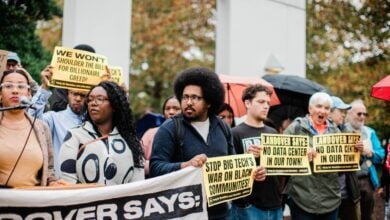
Black communities are still terrorized by police violence and disproportionately deprived of decent housing, healthcare, education, and jobs in a capitalist system that turns basic necessities into commodities to flip for profits.
The racist spirit of the Confederacy is still alive and has found a home in the Trump administration, which is accelerating attacks against Black civil rights: eliminating DEI programs eliminated by executive order, purging Black workers from federal jobs, shutting down civil rights investigations. In the wake of the Supreme Court gutting the Voting Rights Act, Republican-led states from Texas to Louisiana to Alabama are racing to dismantle majority-Black districts — an attempt to roll back a century of social progress.
To end the war on Black America, we must end the rule of the billionaires. Ever since the days of slavery, the elites in this country have profited off the backs of Black people. They have also seen Black peoples’ social movements as a threat to their power. That is why the abolitionist and Civil Rights movements were met with such resistance, and why the gains of those movements are constantly under attack by the racist elite.
To fight for Black freedom is to fight to take power away from those elites once and for all. To fight for Black freedom is to fight to end capitalism and build socialism in its place — a system where the working class, not billionaires, holds political power, and the economy is planned to meet the needs of the people and the planet.
We embrace the revolutionary legacy of Juneteenth by building the movement for Black liberation and a socialist future!