The city of Pittsburgh is growing. Why are politicians and corporate executives trying to convince us that our school district must shrink?
Pittsburgh Public Schools (PPS) face a difficult financial situation. The district expects an annual deficit of $23 million for fiscal year 2025. Additionally, the district’s buildings have an average age of 90. Of these, 21 school buildings are over a century old, and many have not seen significant renovations or investment in years. This set of circumstances led PPS to invite the Boston-based private consultant group Education Resource Strategies (ERS), which has proposed a massive restructuring plan to close many schools and consolidate neighboring ones.
But what caused all of this? PPS’s limited public funds are not a new story to school districts across America. The American public school system has faced a relentless attack from the capitalist class seeking to privatize education, break up teachers’ unions, and delegitimize any public institution that meets the needs of poor and working people. City schools are often hit hardest by these efforts, as they exist in population-dense areas with crumbling public infrastructure and a relatively low property-tax revenue to pull from – compared to wealthier suburbs.
The city government of Pittsburgh has exacerbated this phenomenon with its specific decision-making. Pittsburgh enticed hundreds of corporations with major tax incentives. Additionally, its largest employer, the University of Pittsburgh Medical Center (UPMC), pays zero dollars in property taxes. These massive corporations spurred a population boom but contribute little to the public funds necessary to educate the city’s children adequately.
What is Educational Resources Strategies?
Educational Resource Strategies (ERS) is a private education consultant group located just outside of Boston that prides itself on proposing “transformative shifts in resources, structures, and practices” in American schools. In practice, school districts contract ERS out to send representatives to their schools to analyze how to cut costs. ERS takes a check while the district outsources the difficult job of deciding what specific schools are to be closed and which specific workers are to be laid off. This playbook serves is similar to the activities of companies like McKinsey that coordinates with state governments to privatize social services or the International Monetary Fund’s extensive history of coercing countries into privatizing whole sectors of their economy.
One quick look at the ERS’s Board of Directors provides insight into how strong their connection is to the most predatory elements of the capitalist class. Marcia Blenko serves on the ERS Board and also works as an Advisor Partner at Bain & Company. Bain & Company (parent company of Mitt Romney’s Bain Capital), is a global consulting firm that has been around for decades and is infamous for “restructuring” companies with mass layoffs. Yet again, we have another massive private consultant company with a long track record of gutting public services.
Are we supposed to believe that the ERS has the working people of Pittsburgh’s interest in mind when they tell us that we need to close 14 of our schools?
The proposal – close and consolidate
On October 15, 2024, Educational Resource Strategies (ERS) presented its final proposal to the Pittsburgh Public School Board. They recommend closing 14 schools, opening 3 new schools, and consolidating students into 12 existing schools. The ERS plan is comprehensive: they name each school that will be closed, cite specific locations for new schools, and identify what types of renovations will be made to the existing schools. It is clear that this proposal involved plenty of cooperation from PPS, and it’s even clearer that PPS intends to execute this plan.
This proposal will hurt the students, families, and teachers of Pittsburgh Public Schools.
Consolidation will severely overwhelm the existing schools. As mentioned earlier, PPS buildings are, on average, about 90 years old. The ERS suggests pushing significant numbers of students into outdated school buildings. Buildings of this age are limited in terms of what kinds of renovations/expansions are possible. We can expect that class sizes will explode under these conditions, jeopardizing the safety and education of every student involved. When ERS surveyed students at PPS, 90% of Elementary and Middle School students listed their safety as ‘Highly Important’. ERS and PPS plan to ignore this sentiment when consolidation takes place.
This plan will even harm students’ ability to even get to school. Students with disabilities make up roughly 23% of the overall PPS population. Many of these students require special transportation to get to school. Closing and consolidating schools will make this endeavor far more difficult, as many of these students will be traveling far greater distances to get to and from school. The issue of transportation was the number one listed concern among parents, guardians, & community members when surveyed about the proposal.
Lastly, with school closures looming, teachers and staff at PPS are preparing for incoming layoffs. The school board has provided little to no communication as to what their plans will be with the staff currently running the schools on the chopping block. These staff members are left wondering whether they’ll have a job to return to after summer break these next couple of years. Meanwhile, the remaining teachers prepare for the worst: virtually every year PPS is understaffed, and many of these schools expect huge increases in student populations in the next couple of years.
What is the solution?
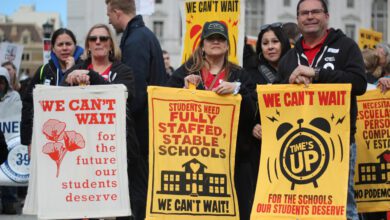
On the ground, parent and community activists are fighting back against these proposals by protesting at hearings. Some community members even proposed a tangible alternative plan that would address many of the district’s problems while closing fewer schools. To make lasting and impactful improvements to the experiences of our students in Pittsburgh, though, more needs to be done.
The city needs to hold its large corporations accountable and discontinue the tax incentives that leave our schools massively underfunded. If UPMC was forced to pay property taxes, it would add nearly $14 million to the city’s coffers. This would be enough to cut PPS’ $28 million budget deficit in half. Pittsburgh must immediately reinvest in its public schools, services, and infrastructure to allow for updated buildings, reasonably sized classes, and fully staffed buildings. Lastly, the city needs to ward off predatory consultant groups like ERS, whose motives seek to privatize every public utility that working people benefit from. With city representatives beholden to corporate interests, none of this can happen.
The families, workers, and children of Pittsburgh need a socialist reconstruction of our schooling system. We need massive public investment in our public schools, we need to discontinue the charter school system that has been siphoning public funds away from PPS, and we need to combat all private groups and individuals that push austerity onto our city’s children.