
Progressive movements across Africa and the world convened for the Pan Africanism Summit Against Imperialism (PASAI) in Nairobi, Kenya in May. The PASAI summit countered France’s “Africa Forward” summit, also held in Nairobi — the first time a France-Africa summit has been hosted outside of a Francophone country. French President, Emmanuel Macron and over 30 African heads of states and representatives attended the imperialist summit hosted by Kenyan President William Ruto.
France’s decision to host this summit in an Anglophone country represents a major shift for France in Africa. After unsuccessfully occupying the Sahel region in failed military operations to resolve the security crisis in West Africa, anti-French and anti-colonial sentiment culminated into mass uprisings which led to the popularly-supported coups in Mali, Burkina Faso and Niger. The Alliance of Sahel States kicked out French troops and shut down their bases. Senegal, Chad, and Ivory Coast were among other West African countries to follow AES in French expulsion. Now that France has been cut off from key resources in the Sahel, they are shifting their focus towards East Africa in an attempt to reassert their colonial footprint on the continent.
Macron and Ruto’s government signed a Defense Cooperation Agreement on October 29, 2025. The National Assembly recently ratified this agreement in April ushering the deployment of 800 French troops to the historic port-city of Mombasa to conduct maritime security training. It’s no coincidence that Kenya hosts four U.S. bases including “cooperative security locations” in Mombasa and Manda Bay. The Manda Bay Airfield is a strategic launchpad for U.S. drone strikes in Somalia and Yemen and power projection in the Red Sea and Persian Gulf. Euronews reported on May 6 that France’s nuclear powered Charles de Gaulle aircraft carrier, alongside its strike group, were moving south of the Suez Canal and into the Red Sea.
France’s “Africa Forward” Summit represents an attempt to access Africa’s human and material resources, using Kenya as an eastern entry point in one of the continent’s most geostrategic regions.
On my flight from Amsterdam to Nairobi, Kenya, I read a short pamphlet titled Kenyan Organic Intellectuals Reflect on the Legacy of Pio Gama Pinto. Edited by a network of Kenyan Organic Intellectuals, it compiled a series of reflections written from Kenyan organizers, activists, and researchers. Pio Gama Pinto was born in Nairobi on March 31, 1927 and was assassinated at his home in the Westlands of Nairobi, February 24, 1965 – 3 days after his dear friend Malcolm X was martyred.
Pinto is a forgotten freedom fighter in the struggle for Kenya’s independence. He was a socialist, journalist, politician, and father. Formally educated in India, he became involved in the Goa liberation movement against Portuguese colonialism before returning to Kenya in 1948. He played a key role as a strategist and major organizer behind the scenes of the Kenya African National Union (KANU) in the struggle against British colonialism and for Kenyan independence. During this time he ran the Daily Chronicle for the Party and later established the Pan-African Press.
The struggle for national liberation in Kenya was rooted in the Mau Mau movement, which created a social basis for independence between 1952-1960. This movement was led by the Kikuyu people living in the Central Highlands of Kenya which is a fertile, high-altitude region near Mount Kenya. Under British colonialism, huge swaths of this arable land were appropriated into “White” Highlands for British settlers, putting a million Kikuyu people into landless and impoverished villages.
It is worth noting that while the Kikuyu ethnic tribe led the movement, there was multi-ethnic support. The Mau Mau fighters in this struggle were the Kenya Land and Freedom Army (KLFA) united around the reclamation of land and independence from colonialism. A key revolutionary figure who emerged from the KLFA was Dedan Kimathi, a Field Marshal, who is widely regarded as a freedom fighter across Kenya.
The militant anti-colonial struggle of the KLFA created a crisis for British colonialism in the country, accelerating the economic decline of the colonial system. Despite the crisis created for the settlers and British, the colonialists ultimately won the battle, but at the cost of maintaining Kenya as a colony. Kenya became independent in 1963 and KANU swore in Jomo Kenyatta as the country’s first post-independence president.
Pinto was jailed by the British between 1954-1959 for supporting the anti-colonial resistance of the Mau Mau movement and KLFA fighters. This shaped his unwavering fight for land reform and socialist transformation in Kenya through KANU. Yet, with growing ideological tensions between Kenyatta’s national bourgeois government, and the progressive, socialist wing of KANU, Pinto became the first political martyr in the process of seeing Kenya’s revolutionary transformation through.
The unfinished tasks of Kenya’s reconstruction
When I arrived in Nairobi, I immediately noticed the luscious greenery of the highlands that are embedded throughout the capital. The sidewalks along long stretches of urban roads, are a bed of rich red clay soil. Small quarries hide themselves along patches of grass that separates the sidewalks and neighborhoods while shrubs and trees with vibrant yellow trumpet flowers peak out in ornaments. Weaved into this scene surrounding the urban center is the inorganic consequence of British, US, and now French presence in the country. Colonialism and imperialism imposed underdevelopment on this entirely human and resource-rich country, and Kenya’s current government is complicit in continuing to offer up the country’s sovereignty to Western powers.
The past few years of governance under Ruto demonstrates how neocolonialism works in Kenya. This coming June will mark two years since Kenya’s historic Gen Z uprisings, which permanently changed the political calculus within the country. Ruto introduced an IMF-backed Finance Tax Bill in 2024. Its purpose would’ve allowed multinational corporations such as those based in the U.S., to access flowing capital by establishing operations in Kenya.
This would accelerate the “deindustrialization” of Kenya and immediately raise taxes on basic goods for food, fuel, and housing at a time where cost of living has only continued to skyrocket. 74% of Nairobi’s residents live in slums on less than a dollar a day. In response to the outrageous potential for plunging millions further into poverty, youth rose up to fight back against this bill. Over 60 were killed and 300+ students, activists, and other workers were arrested. Despite the immense police repression that led to the massacre of civilians, Kenyan youth were able to occupy Parliament in a historic move. Ruto ultimately conceded to the uprisings, cancelling the proposed bill and dissolving most of his cabinet.
Ruto has not only deployed Kenyan troops against his own people, but also has sent hundreds of troops to lead so-called peacekeeping missions in Haiti — an historical irony for an African country’s head of state to send police to the first Black Republic that broke the chains of slavery in the western hemisphere, all at the behest of the U.S. and UN. The government also remains inactive with addressing the high rates of Gender-Based Violence where roughly one woman was killed everyday within the last three months of 2024.
This is a snapshot of the country’s contemporary history in which millions throughout the country are growing more frustrated at the bad governance, rapidly rising inequality, and extreme levels of police brutality in response to mass discontentment of Kenyan people’s living conditions.
There is a revolutionary Pan Africanist solution to the crises millions of Kenyans face
The Pan Africanism Summit Against Imperialism is an anti-imperialist front against French neocolonialism, U.S. imperialism, and the comprador regime of President William Ruto in Kenya. It represents the end of an era of bowing to imperialist and neocolonial masters. PASAI demonstrates the unwavering commitment to resistance in the face of deadly repressive tactics of the police and attempts from Ruto to service US imperialism and its junior partners such as France.
The summit brought together international, regional, and local delegates to oppose the France-Africa Summit. However, it also brought delegates together to firmly articulate a campaign that defines a strong anti-imperialist unity from international progressive forces. The popular transformation taking shape in the Sahel, through the AES, has been a positive development for Africa as whole. Social movements, political parties, and mass organizations are looking at the Sahel with a resurgence of optimism needed to turn towards their countries’ context and deepen the struggle for national liberation and towards a socialist, Pan-African reconstruction. PASAI conveners emphasized the need to offer up critical support for this very reason.
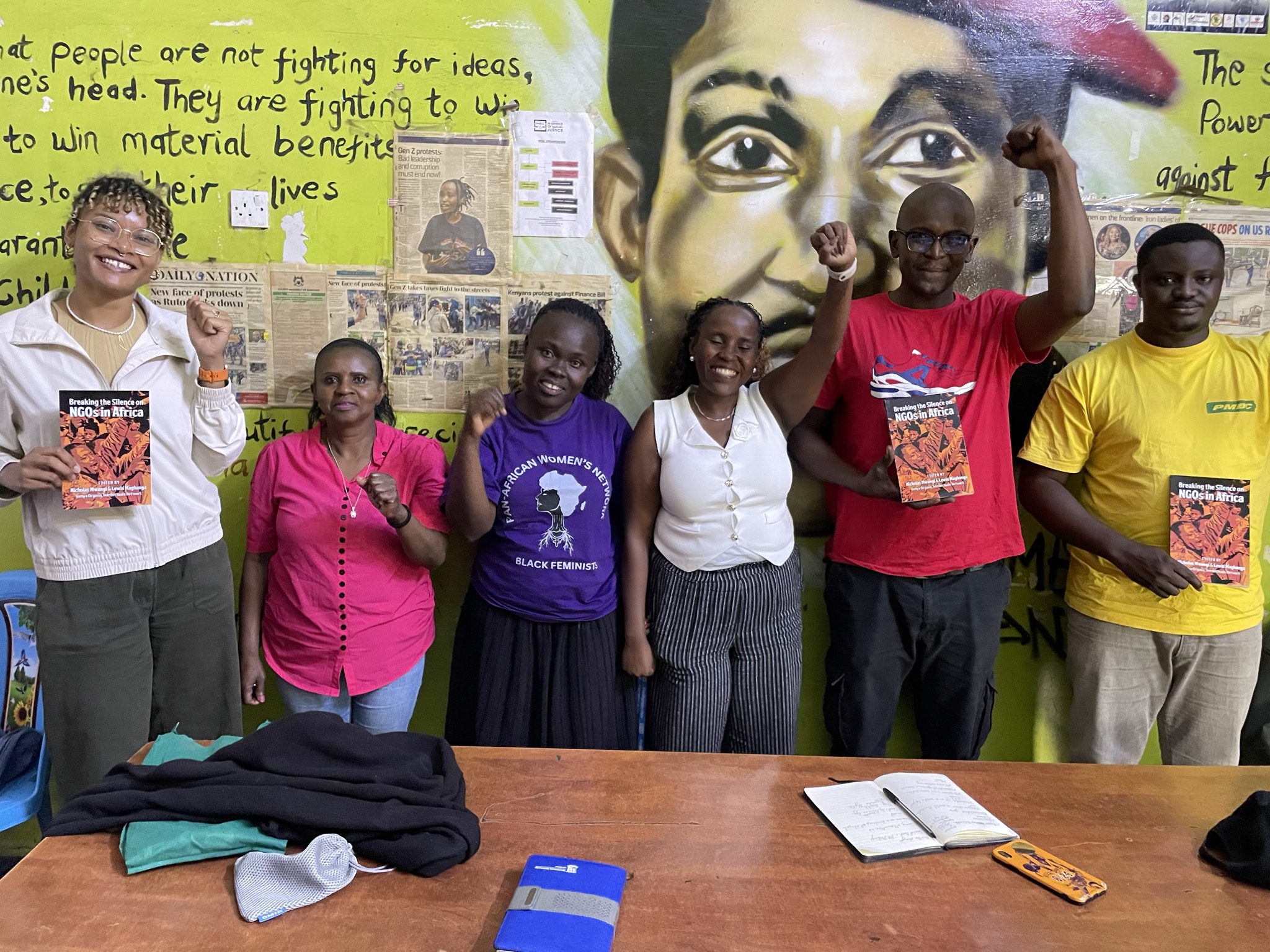
For Kenya in particular, members of the Communist Party Marxist Kenya identified the key task of carrying out a “national democratic revolution.” In other words, continue the unfinished liberation struggle from Mau Mau to the Gen Z Youth uprisings.
The convening culminated into a peaceful mass demonstration on May 12 in opposition to the presence of imperialist foreign power less than a mile away from where PASAI convened. The resistance to France’s summit drew in Kenyan police forces who rapidly and violently attempted to crush the rightful anger and dissent from demonstrators. Tear gas was deployed and dozens of delegates and activists were arbitrarily arrested. The calculated repression from Kenyan police against African people did not deter them from continuing to resist.
A swift campaign over the next 54 hours was launched to release the political prisoners arbitrarily detained. By May 15, all delegates of PASAI were successfully released due to the pressure of activists mobilizing to multiple police stations and drawing national and international attention to the unlawful detention. With having been in Kenya all of 60 hours, it was clear that the spirit of Dedan Kimathi, Pio Gama Pinto and other freedom fighters of a prior era continue to live on in the fighters of Kenya’s liberation struggle today.
Macron’s visit to Nairobi was predictably marked by paternalistic and racist remarks, from saying the French “are the true Pan-Africanists,” to telling summit participants to quiet down, France’s attitude towards African countries has not changed.
Masses of Kenyan people are clear in recognizing France’s intentions within their country. We commend the activists, movements, and organizations who mobilized quickly to reject neocolonialism and imperialism. As a delegate from the U.S., there is a particular and special responsibility our socialist movement has to the African people. U.S. imperialism – through AFRICOM and NATO – is the biggest threat to the world’s liberation struggles today. The greatest act of solidarity will come from our ability to disrupt imperialism from within and, alongside progressive forces around the world, to end imperialism everywhere.
Down with imperialism! Down with neocolonialism! Long live international solidarity! Long live Pan Africanism!