Pictured: A mural painted on the former U.S. embassy in Tehran, Iran
The illegal war against Iran launched by the United States at the end of February is an escalation in a decades-long campaign of hybrid war against Iranian people. For nearly a century, western imperialism has sought to undermine Iran’s sovereignty and reshape West Asia to align with the goals of imperialism. This hybrid war has taken many forms, from regime change, puppet governments, economic strangulation, proxy wars, and assassinations.
In 1953 the CIA overthrew the democratically elected government of Mohammad Mossadegh. This was the CIA’s first regime change operation—code-named “Operation Ajax”—and became the playbook for later CIA operations with deadly consequences around the world. Operation Ajax is covered comprehensively in a recent episode of the Socialist Program. The regime of the Shah was backed to the hilt by the United States, and Liberation News has previously covered this sordid history in detail.
Since the 1979 revolution, it has been a foreign policy priority of the United States to return to the era when Iran was a useful client state for controlling the region. Under the Shah, Iran and Israel formed the two pillars of U.S. imperialist strategy in the region. The current phase of open war by the U.S. and Israel against Iran must be seen as a new phase of escalation of this decades-long hybrid war with the same goal: returning the Iranian state to one that is amenable to Zionism and imperialism.
Iran in the crosshairs
The Revolution of 1979 was among the most significant mass movements of the 20th century. After a 97 day general strike that over 10% of the population participated in, the Shah was forced to abdicate on February 5th, 1979. The Revolution was ideologically complex, with a wide range of political tendencies vying for power. The force ultimately victorious in leading the masses against the Shah, however, was the radical clergy, led by Ayatollah Khomeini.
For the U.S. led imperialist bloc, such a display of popular power and sovereignty could not be tolerated. It would have to be brutally crushed. Within the first year of the revolution the United States and its European allies began arming Iraq, and in 1980 Iraq launched an invasion of Iran. The war ground on for eight years and claimed over a million lives. In Iran, the war is known as the “Imposed War,” understanding it as an unprovoked, foreign backed attack on the precarious sovereignty of the new revolutionary state.
The war could not have continued without the support of the imperialist bloc for Iraq. Donald Rumsfeld, later George W. Bush’s Secretary of Defense and architect of the U.S. war on Iraq in 2003, was Reagan’s Special Envoy to the Middle East and was famously photographed meeting with Saddam Hussein. The Iran-Iraq war had its roots in several factors, including Iran’s stated goal of supporting a revolution in Iraq, and border conflicts, which the US had historically mediated in favor of Iran while its client, the Shah, was in power.
The ultimate goal of the U.S. in encouraging this war was to weaken both sides. Weapons flowed freely from the West into Iraq, including West German supplied poison gas and other chemical weapons that were used to kill thousands of Iranians, but also, covertly, to resupply the fledgling Islamic Republic of Iran in the scheme known as the “Iran-Contra Affair.” As covered by Liberation News, “the Iran-Contra Affair was a documented case of Reagan negotiating [arms sales] in secret with the Islamic Republic of Iran to by-pass Congress to continue funding the criminal Contras in Nicaragua.”
In July 1988, in the last months of the war, Washington’s brazen aggression towards Iran was illustrated again as the U.S. Navy fired two-surface-to-air missiles at Iran Air Flight 655, killing all 290 civilians aboard. To this day a formal apology has never been given. The Imposed War cost nearly a million lives and decreased the oil refining capacity and industrial base of Iran for decades, but it did not succeed in its primary goal of toppling the state.
Regional destabilization
After the Iran-Iraq War ended in a bloody stalemate in 1988, Iran began to stabilize, even as the broader regional order was being redrawn. The collapse of the Soviet Union eliminated the main external source of support for national liberation movements and Arab nationalist governments worldwide. By 1995 Iran was identified as the greatest threat to American hegemony and Zionism in the region. This strategic position crystallized over the course of the 1990s and was solidified into doctrine with the Project for a New American Century and the 2003 invasion of Iraq.
Iraq, on the other hand, was left exhausted and depleted by the war and in short order the United States decided to dispense with Saddam Hussein. While a useful tool against Iran, Iraq under Saddam was not a simple U.S. puppet, and Baghdad had clashed with Washington over the years. As former Secretary of State Henry Kissinger famously remarked, “America has no permanent friends or enemies, only interests.” With the collapse of the Soviet Union imminent, it was in the interests of the U.S. to dismantle any potentially independent states in the region.
The First Gulf War of 1990 decimated the country. After the U.S. bombings ended, 1.5 million were killed by the devastating sanctions placed on the country in the 1990s. Over 500,000 children were starved to death by the sanctions, a decision described in 1996 by then U.S. ambassador to the UN Madeleine Albright as a “hard decision” that was ultimately “worth it.”
Simultaneously, the Palestinian Liberation Organization, under pressure and without the support of its traditional allies, signed the Oslo Accords in 1994 — a move that the left factions within the PLO strongly opposed. With the government in Iraq reeling and the Palestinians forced to recognize the Zionist project, U.S. imperialism turned its sights back on undermining Iran. Bill Clinton levied the first sanctions on Iran’s oil industry in 1995 and Congress codified sanctions in 1996 on the grounds that Iran was sponsoring terrorism and developing weapons of mass destruction, the same justifications that were later be applied to Iraq.
In the early 2000s this policy was crystalized in the Project for a New American Century report detailing plans to destroy 7 countries in 5 years—Iraq, Syria, Lebanon, Libya, Somalia, Sudan and finally Iran. In 2002, George W. Bush had dubbed Iran as part of the Axis of Evil, along with Iraq and North Korea. When the U.S. invaded Iraq in 2003, Iran found itself surrounded by American military bases on two borders. The message was clear. Iran was on a short list of targets for the global imperialist order led by the United States.
Nuclear theatrics
With the various crises by the end of the second term of the Bush administration and the American people tiring of war in Iraq the people sought change. With this new attitude there was hope of better relations between the U.S. and Iran. By 2008 change was being promised by the new president in the United States. Barack Obama campaigned on ending the unpopular wars in the Middle East which killed over one million Iraqis and trillions spent to destroy several countries.
While Obama postured as a peace maker he inflicted greater misery on the region—surging troops back into Iraq, flooding Syria with a billion dollars in weapons per year in the CIA’s largest covert operation ever, Operation Timber Sycamore, and imposing crushing sanctions on Iran. Sanctions caused the exchange rate to plummet. As Obama layered new sanctions on the country between 2011 and 2015 starting with imposing secondary sanctions on buyers of Iranian oil, the currency lost an estimated 38% of its value against the dollar from 2011 to 2012 and imports were highly restricted. Obama bragged that:
“Because of our efforts, Iran is under greater pressure than ever before… Few thought that sanctions could have an immediate bite on the Iranian regime. They have, slowing the Iranian nuclear program and virtually grinding the Iranian economy to a halt in 2011. Many questioned whether we could hold our coalition together as we moved against Iran’s Central Bank and oil exports. But our friends in Europe and Asia and elsewhere are joining us. And in 2012, the Iranian government faces the prospect of even more crippling sanctions.”
The sanctions did achieve their goal of forcing the Iranians to negotiate the Joint Comprehensive Plan of Action, commonly known as the Iran nuclear deal, in 2015. This deal provided vital sanctions relief while limiting nuclear enrichment and allowing extensive International Atomic Energy Agency surveillance that would be weaponized against Iran in the coming years.
The nuclear deal was short-lived. By 2018 the United States under President Donald Trump unilaterally left the deal and reimposed maximum pressure sanctions on Iran. The exchange rate dropped further and imposed more hardship on working class Iranians who had specifically elected a president (Rouhani) who wanted to negotiate with the US.
The Europeans, specifically the UK, France, and Germany did not uphold their obligations for sanctions relief under the deal when the US pulled out. For the next two years, however, Iran continued to meet its obligations under the JCPOA despite the violations of the deal on the part of the U.S. and Europe.
The Democrats also refused to reenter the JCPOA with the election of President Joe Biden demonstrating once again that the hybrid war against the Iranian people and drive to subjugate the last sovereign nation in the Arab-Iranian region is a bipartisan project. The economic war against the Iranian people has hit its peak by the end of 2025 with the currency plunging to an all time low of 1,440,000 rial for 1 dollar, sparking deeper economic hardships on the country.
The sanctions strategy
The goal of the sanctions regime—like it is with the sanctions on Cuba, Venezuela, or any other of the over one third of the world subjected to unilateral U.S. sanctions—is to destabilize the country and create enough economic destitution that the people rise up. The protests in early 2026 were a manifestation of this strategy.
What began as protests with clear economic, social, and political demands against corruption and mismanagement in the economy were instrumentalized by U.S. and Israeli assets. The claim of foreign interference does not simply come from the Iranian government. On January 2nd, former Trump Secretary of State and CIA director Mike Pompeo tweeted: “Happy New Year to every Iranian in the streets. Also to every Mossad agent walking beside them…” After several days of protests Pahlavi called for mass demonstrations on the 8th and 9th. That is when the violence intensified.
As Vijay Prashad summarized for People’s Dispatch:
“The ‘protests’ shifted overnight from peaceful assemblies to high-intensity urban sabotage resulting in the deaths of roughly 100 law enforcement officers, with claims that some officers were burned alive, a security member was beheaded, and a medical clinic was torched, claiming the life of a nurse, for instance. The use of close-range small arms fire against civilians further suggests an attempt to maximize domestic tension and provide a pretext for foreign intervention.”
Meanwhile, Western media refused to cover the millions strong demonstrations in opposition to the US/Israeli campaign of sabotage in January and then on the anniversary of the revolution on Feb. 11. Western media left most of their audience with the false image of a country where the population is unified in its opposition to the Islamic Republic and one that would welcome U.S. and Israeli bombs and troops as “liberators,” which is a very dangerous lie.
The assault begun by the U.S. and Israel on Feb. 28, which has destroyed infrastructure and has so far left over 1,500 Iranians dead, has not sparked a mass uprising. In reality, it has had the opposite effect, uniting the nation in defense of its sovereignty. Ultimately, under these conditions of siege and war, the self determination of the Iranian people is restricted by imperialism first and foremost.
Marching to open war
Economic warfare was not the only war waged on Iran. Years of Israeli assassinations of nuclear scientists and military personnel abroad were part of trying to weaken the Iranian state. Now in this counterrevolutionary moment the battle for Iran has become existential with the imperialist bloc led by the United States and the Zionist colony seeking to dismember Iran or degrade the state to the point where it can no longer fight back and be considered sovereign.
Concurrently with the escalation of economic warfare in 2018, military threats increased as well. During his first administration, Trump packed his national security council with the most hawkish neocons like John Bolton, a veteran of the Reagan and both Bush administrations.
This administration took a policy of maximum pressure and targeted assassinations, targeting several Iranian nuclear scientists and military figures for assassination. The most brazen was the murder of general Qassem Soleimani on January 3rd, 2020. Soleimani was the leader of the Quds Force of the Iranian Revolutionary Guard Corps and was responsible for coordinating and developing regional anti-Zionist and anti-imperialist forces, known as the Axis of Resistance.
Iran’s military doctrine has prioritized defensive depth through networks of state and non-state allies in the region, including popular militias such as the Hashd Al Shabi in Iraq, the Palestinian resistance factions, Hezbollah in Lebanon, and the former Ba’ath government in Syria. It is important to note, as Liberation News has reported, that these are all organic, complex political movements and not “proxies” of Iran as often reported in corporate media.
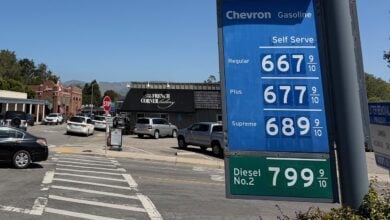
Since the onset of the genocide in Gaza in 2023, the U.S. and Israel have been engaged in open war against the people of West Asia. From Gaza to Lebanon to Syria to Yemen to Iraq, U.S. bombs are falling every day. This current escalation brings with it the dire need for a mass anti-war movement in the United States. The United States has already killed over 1,000 Iranians in a matter of days, and U.S. workers sent to die for the billionaire oligarchs are already coming home in body bags. Gas prices are soaring and a prolonged shutdown of oil infrastructure in the Gulf could crater the world economy.
It is important for the people of the U.S. to know this war serves no one but the billionaire class of war-profiteers and imperialists. The only solution is to end the war on Iran, lift the sanctions, and allow West Asia to determine its own future—for all of its peoples.
Photo: Kabelleger / David Gubler via Wikimedia Commons